CIP Return Line Solutions: Using Sanitary Self-Priming Pumps for Maximum Efficiency
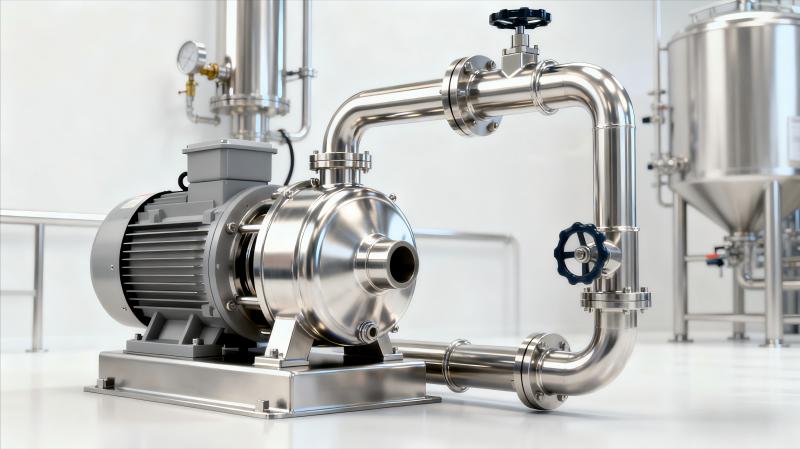
Modern sanitary processing environments rely heavily on Cleaning-in-Place (CIP) systems to maintain strict hygiene standards. Yet many operations overlook a critical component that determines overall system effectiveness: the pumps handling return flow.
Traditional pumping solutions often fail to meet the demanding requirements of CIP return applications, resulting in inefficiencies and potential contamination risks. Sanitary self-priming pumps represent engineered solutions specifically designed to overcome these challenges while ensuring optimal cleaning performance.
Common CIP Return Line Challenges
Cleaning-in-Place systems clean processing equipment—pipes, tanks, and valves—without disassembly. The return line transports cleaning solutions and soiled fluids back to the central system for treatment or disposal. This process presents several inherent challenges:
-
Air ingress and vapor pockets disrupting flow and reducing cleaning efficiency
-
Varying fluid viscosities throughout cleaning cycles
-
Solid particle handling from dislodged residues
-
Strict hygiene requirements demanding easy cleaning and complete drainage
Standard centrifugal pumps often require manual priming and struggle with these conditions, leading to incomplete cleaning, increased downtime, and higher maintenance costs.
How Sanitary Self-Priming Pumps Transform CIP Performance
Sanitary self-priming pumps address these challenges through engineering specifically designed for sanitary applications. Unlike conventional pumps, these specialized units offer distinct advantages:
Superior Air-Handling Capability
The defining characteristic of self-priming pumps is their ability to automatically remove air from the system during start-up and operation. This proves particularly valuable in CIP return applications where air entrainment commonly occurs during tank draining or fluid level fluctuations. The pump creates a vacuum that evacuates air before transitioning to efficient liquid handling, ensuring consistent flow rates throughout the cleaning cycle.
Enhanced Reliability with Varied Fluids
CIP processes typically involve multiple stages with different fluids—from pre-rinse water and caustic cleaning solutions to acid rinses and final sanitizers. Sanitary self-priming pumps maintain consistent performance across these varying viscosities and chemical compositions, providing reliable fluid handling throughout the entire cleaning sequence.
Optimal Handling of Residual Solids
The self-priming design enhances capability to handle small solid particles commonly found in CIP return flows. These may include food residues, precipitated minerals, or other microscopic debris dislodged during cleaning. By effectively transporting these materials without clogging, these pumps prevent cross-contamination between cleaning cycles.
Sangyie Sanitary Self-Priming Pumps: Technical Advantages
Sangyie sanitary self-priming pumps, as side channel pumps, deliver multiple technical benefits for CIP applications across food-processing, beverages, brewing, dairy, cosmetic, pharmaceutical, biotechnology and semiconductor industries.
Performance and Durability Features
-
High efficiency ensuring energy-saving operation
-
Large flow rates up to 80m³/H meeting rapid return requirements
-
High head capacity reaching 60M, adapting to complex pipeline layouts
-
Extended service life reducing replacement frequency and maintenance costs
-
Corrosion resistant construction prolonging equipment lifespan
-
Acid and alkali resistant design accommodating various cleaning agents
-
Low noise operation improving work environment
-
Minimal vibration protecting system integrity
-
Broad temperature range handling media from -10°C to 150°C
Material Specifications
-
Medium-contact parts: 1.4301 (AISI 304) or 1.4404 (AISI 316L)
-
Mechanical seal options: SIC/SIC/EPDM, SIC/SIC/FKM, SIC/SIC/HNBR, SIC/C/EPDM, SIC/C/FKM, SIC/C/HNBR, TC/TC/EPDM, TC/TC/FKM, TC/TC/HNBR
-
O-ring materials: EPDM, FKM, HNBR
Industry-Specific Application Benefits
The versatility of sanitary self-priming pumps makes them ideal for various industries with stringent hygiene requirements:
Food Processing
In food applications where product changeovers occur frequently, efficient CIP systems prove essential for preventing allergen cross-contamination. Self-priming pumps ensure reliable removal of all cleaning solutions, including those with higher viscosities from fatty soils or protein residues.
Pharmaceutical and Biotech
These industries demand absolute cleaning reliability to maintain product purity and meet regulatory standards. The consistent performance of self-priming pumps in handling diverse cleaning agents provides necessary assurance for validated cleaning processes.
Dairy Operations
Dairy processing generates significant protein and mineral deposits that challenge cleaning systems. Self-priming pumps effectively handle variable fluid properties throughout dairy cleaning cycles, from initial water rinses to acidified final rinses.
Beverage Production
With their ability to handle aerated liquids common in beverage operations, these pumps prevent performance degradation when processing carbonated residues or incorporating air during tank drain-down phases.
Technical Specifications Overview
| Parameter | Sangyie Specifications |
|---|---|
| Max flow rate | 80m³/H |
| Max head | 60M |
| Medium temperature | -10 ~ 150°C |
| Mechanical seal | double mechanical seal, dry grinding mechanical seal |
| Inlet & outlet connection | clamped, threaded, flanged, or custom |
| Inlet & outlet size | 1¼" ~ 4" |
| Motor power | 0.75KW ~ 30KW |
Available Options
-
Semi-open impeller designs
-
Dry grinding type mechanical seal
-
Explosion-proof motor
-
Cart mounting systems
-
Console integration
Selection Considerations for CIP Return Applications
When specifying pumps for CIP return applications, several factors demand careful consideration:
Material Compatibility
Stainless steel construction—particularly 316L or higher grades—provides essential corrosion resistance for aggressive cleaning chemicals while meeting sanitary standards.
Impeller Design Selection
-
Closed impellers deliver highest efficiency for clean liquids
-
Open impellers better handle small particles and viscous fluids
-
Semi-open impellers balance efficiency with solids-handling capability
Capacity and Performance Requirements
Proper sizing requires analysis of:
-
System flow requirements (typically 3-7 feet/second velocity in return lines)
-
Total dynamic head accounting for elevation changes and pipe friction losses
-
Net Positive Suction Head Available (NPSHa) in specific installations
-
Temperature ranges for both process and cleaning phases
Sanitary Design Features
Prioritize pumps with easy disassembly, polished surfaces (Ra ≤ 0.8 µm), and minimal dead areas to support effective cleaning and prevent bacterial harborage, aligning with 3-A Sanitary Standards and EHEDG recommendations.
Best Practices for Optimal CIP Return Line Performance
To fully leverage sanitary self-priming pump benefits in CIP return applications:
Proper Installation Guidelines
-
Position pumps close to fluid sources
-
Minimize suction line elbows and fittings to reduce friction losses
-
Ensure adequate straight pipe runs before pump inlets (typically 5x pipe diameter)
Strategic Maintenance Approaches
-
Implement routine inspection of wear components
-
Verify priming performance regularly
-
Establish preventive maintenance schedules based on operational hours
System Integration Considerations
-
Coordinate pump controls with CIP sequence programming
-
Monitor performance trends to identify developing issues
-
Document operational parameters for each successful cycle to establish performance baselines
Key Operational Benefits
Sanitary self-priming pumps deliver measurable advantages that extend beyond basic CIP functionality:
-
Elimination of priming problems that compromise cleaning effectiveness
-
Reliable handling of variable fluids throughout multi-stage cleaning cycles
-
Reduced maintenance requirements compared to standard centrifugal pumps
-
Enhanced cleaning validation through consistent, repeatable performance
-
Decreased operational complexity with automated air removal systems
-
Improved overall equipment effectiveness through reduced downtime
Conclusion
Sangyie sanitary self-priming pumps represent more than just equipment—they embody a strategic approach to enhancing CIP performance through engineering specifically tailored to return line application challenges. By addressing fundamental limitations of conventional pumping solutions, these specialized pumps provide processing facilities with reliable, efficient cleaning capabilities that meet modern sanitary standards.
For processors considering system upgrades or designing new facilities, these pumps offer compelling solutions to the persistent challenge of achieving effective, efficient cleaning with minimal operational complexity.
[Click Here to Contact Us / Visit our Website at www.sangyie.com / Email us at [info@sangyie.com]
Sangyie Technology — Engineering the Flow of Your Success.
Top 5 Benefits of Implementing Hygienic Vacuum Pumps in Your Production Line
Comparing Sanitary Pump Technologies: Why Choose a Sine Pump for Gentle Product Handling
Related Article

DIN 11866 is the overarching standard for aseptic systems that uses DIN 11850 as its "Series A" option.