How to Select and Maintain Hygienic Check Valves for CIP/SIP Systems
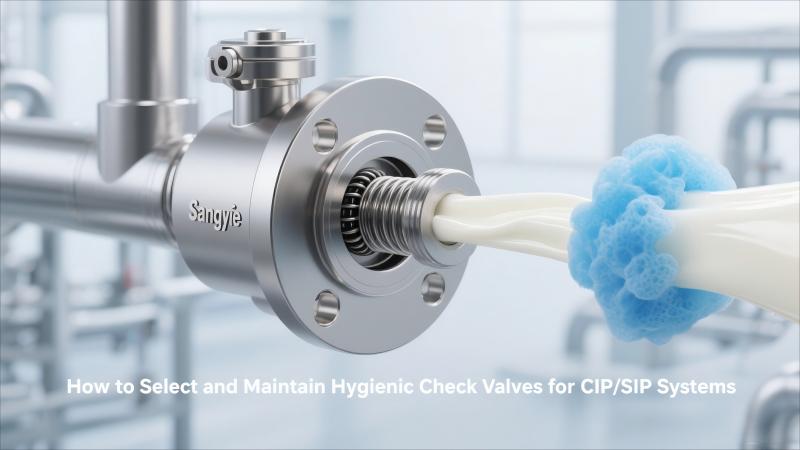
In the high-stakes environments of food, pharmaceutical, and biotech processing, purity is non-negotiable. Your Cleaning-In-Place and Sterilizing-In-Place (CIP/SIP) systems are the guardians of this purity, ensuring that every pipe, tank, and valve is free from contaminants and biofilm.
At the heart of these critical systems are hygienic check valves. A poorly chosen or maintained check valve can become the weakest link—leading to costly cross-contamination, inefficient cleaning cycles, and devastating downtime.
Selecting the right valve and maintaining it properly isn't just a recommendation; it's a necessity for operational excellence. This guide will walk you through the key considerations and introduce you to how Sangyie engineers reliability into every valve we produce.
How to Select the Right Hygienic Check Valve for CIP/SIP
Choosing a valve goes beyond just size and price. It's about matching the valve to your process and hygiene requirements.
-
Material of Construction:
-
Must-Have: 316L or 316L VM (Vacuum Melted) stainless steel for superior corrosion resistance. All surfaces in contact with the product must be electropolished to a surface roughness of Ra ≤ 0.8 µm (or even 0.4 µm for ultra-hygienic applications) to prevent bacteria adhesion.
-
Sangyie's Standard: We use only certified 316L SS and offer advanced electropolishing as a standard feature, ensuring a flawless surface for easy cleaning and sterility.
-
-
Sealing and Seat Design:
-
Must-Have: The seal is critical for preventing internal leakage (which causes contamination) and external leakage (which poses a safety risk). EPDM or FKM/Kalrez seals are common for their temperature and chemical resistance. The seat should be designed for zero stagnation.
-
Sangyie's Solution: Our hygienic check valves feature precision-machined seats and high-performance seals compatible with aggressive CIP chemicals and high SIP temperatures, ensuring a perfect seal every time.
-
-
Crack Pressure and Flow Characteristics:
-
Must-Have: "Crack pressure" is the minimum upstream pressure needed to open the valve. It must be low enough to not restrict flow but high enough to prevent unintended opening from system fluctuations. The flow should be laminar with low pressure drop.
-
Sangyie's Engineering: We offer valves with a range of crack pressures to perfectly match your specific system hydraulics, minimizing energy loss and ensuring reliable operation.
-
-
Compliance and Certifications:
-
Must-Have: Look for valves that meet 3-A, ASME BPE, and EHEDG standards. These are not just acronyms; they are your assurance that the valve is designed and manufactured to the highest hygienic standards.
-
Sangyie's Commitment: Our valves are designed from the ground up to meet these rigorous international standards, providing the documentation and peace of mind required in regulated industries.
-
Essential Maintenance Tips for Longevity and Performance
Even the best valve requires proper care. A proactive maintenance routine prevents failures.
-
Regular Visual Inspection: Check for visible signs of wear, damage, or leaks on the valve body and seals.
-
Functional Testing: Periodically test the valve's operation to ensure it opens and closes at the specified pressure and seals tightly.
-
Seal Replacement: Follow a scheduled program for replacing seals based on the manufacturer's recommendations and your CIP/SIP cycle frequency. This is the most common maintenance item and is crucial for preventing leaks.
-
Full Disassembly and Inspection: For critical applications, schedule a complete disassembly, cleaning, and inspection of internal components to check for wear on the seat and hinge mechanism.
Why Choose Sangyie Hygienic Check Valves?
At Sangyie, we don't just sell valves; we sell confidence in your process. Our hygienic check valves are the product of decades of innovation and a deep understanding of the challenges faced in CIP/SIP systems.
-
Unmatched Reliability: Built with precision engineering and the highest-quality materials to withstand the most demanding cycles.
-
Easy Maintenance: Designed for quick disassembly and reassembly without special tools, minimizing your downtime and maintenance costs.
-
Full Traceability: Every valve comes with full material traceability and certification documentation for complete quality assurance.
-
Expert Support: Our technical team is ready to help you select the perfect valve for your application.
Ready to Eliminate Valve Worries from Your Process?
Don't let a small component become your biggest problem. Investing in the right hygienic check valve from a trusted manufacturer like Sangyie is investing in your product quality, plant efficiency, and bottom line.
Explore our range of Hygienic Check Valves today or contact our experts for a personalized consultation. Let us help you build a more reliable and efficient system.
[Click Here to Contact Us / Visit our Website at www.sangyie.com / Email us at [info@sangyie.com]
Sangyie Technology — Engineering the Flow of Your Success.
316L vs. 304 Stainless Steel: The Ultimate Guide to Choosing Your Safety Overflow Valve
Global Sourcing Guide for ASME BPE Compliant Hygienic Angle Seat Valves in 2025
Related Article

DIN 11866 is the overarching standard for aseptic systems that uses DIN 11850 as its "Series A" option.