Global Sourcing Guide for ASME BPE Compliant Hygienic Angle Seat Valves in 2025
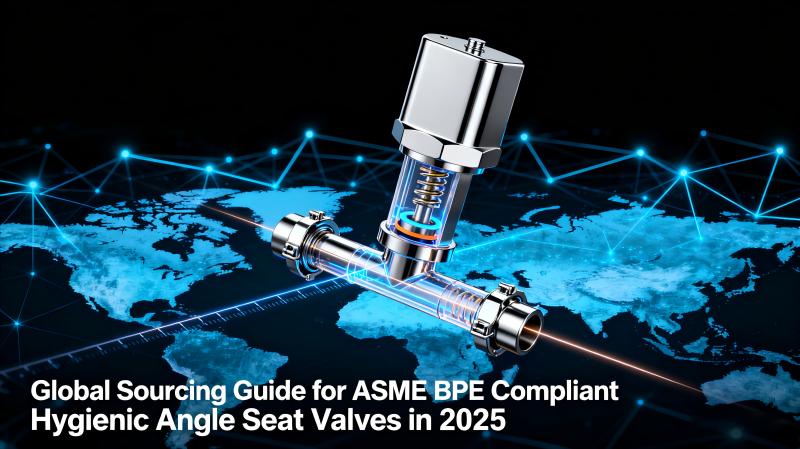
In the highly regulated world of process industries, hygienic angle seat valves have become critical components for ensuring product purity and operational efficiency. For procurement specialists and engineers worldwide, understanding the evolving landscape of these essential components is key to making informed sourcing decisions in 2025 and beyond.
Understanding Hygienic Angle Seat Valves: More Than Just Valves
Hygienic angle seat valves are precision-engineered control elements designed specifically for industries where cleanliness, sterility, and reliability are non-negotiable. Unlike standard industrial valves, these specialized components feature smooth, crevice-free surfaces, use high-grade materials like 316L stainless steel, and are designed for easy cleaning and sterilization to prevent bacterial growth and contamination.
These valves are characterized by their 45-degree or 90-degree angled design, which allows for efficient flow control while minimizing dead spaces where product could accumulate and create contamination risks.
Key Industries Relying on Hygienic Angle Seat Valves
-
Pharmaceutical and Biotech: Requiring strict adherence to regulatory standards and validation protocols
-
Food and Beverage Processing: Needing frequent cleaning cycles and corrosion resistance
-
Dairy Industry: Handling viscous products and requiring CIP (Clean-in-Place) compatibility
-
Cosmetics and Personal Care: Demanding aesthetic product purity and consistent quality
-
Semiconductor Manufacturing: Where ultra-high purity standards are critical
The ASME BPE Standard: Why It Matters in 2025
The ASME BPE (Bioprocessing Equipment) standard is the globally recognized benchmark for equipment used in sterile process applications, particularly in pharmaceutical, biotech, and other high-purity industries.
First published in 1997 by the American Society of Mechanical Engineers, this comprehensive standard provides guidelines for:
-
Materials selection and compatibility
-
Design principles for cleanability and sterilizability
-
Surface finishes and roughness requirements
-
Dimensions and tolerances for interchangeability
-
Testing and certification requirements
-
Documentation and traceability protocols
By 2025, over 30 countries have recognized and implemented ASME BPE as their primary standard for hygienic process equipment. This widespread acceptance makes it essential for global sourcing professionals to specify ASME BPE compliant valves to ensure quality, compliance, and interoperability across international facilities.
Market Trends Influencing Sourcing Decisions in 2025
The global hygienic angle seat valve market is experiencing significant transformations that sourcing professionals must consider:
1. Technological Advancements
-
Integration of IoT sensors for real-time monitoring of valve performance, temperature, and cycle counts
-
Automation compatibility with pneumatic and electric actuators for precise flow control
-
Smart predictive maintenance capabilities that alert operators before potential failures occur
2. Material Innovations
-
Advanced stainless steel alloys with enhanced corrosion resistance
-
Specialized sealing materials like PTFE, TFM, and PEEK that withstand aggressive cleaning chemicals and extreme temperatures
-
Surface treatment technologies achieving ultra-smooth finishes below Ra 0.4μm
3. Customization and Application-Specific Designs
Manufacturers are increasingly offering tailored solutions for specific applications:
-
High-temperature variants for sterilization processes
-
Cryogenic versions for cold process applications
-
High-pressure designs for specialized processing needs
Technical Specifications: What to Look for in 2025
When sourcing ASME BPE compliant hygienic angle seat valves, prioritize these critical specifications:
| Parameter | Standard Specification | Premium Options |
|---|---|---|
| Material | 316L Stainless Steel (1.4404) | ASME BPE 316L (1.4435) with Nb stabilization |
| Surface Finish | Ra ≤ 0.6 μm | Ra ≤ 0.3 μm (Mirror Polish) |
| Pressure Rating | Vacuum to 10 bar (1.0 MPa) | Up to 16 bar for specialized applications |
| Temperature Range | -20°C to +150°C (varies with seals) | -40°C to +200°C with specialized seals |
| Connection Types | DIN, SMS, ISO, IDF, RJT, BS4825, ASME BPE, 3A | Custom configurations available |
| Seal Materials | PTFE (standard) | TFM, PEEK, EPDM, FKM for specific applications |
| Actuation Options | Manual, Pneumatic, Electric | Programmable smart actuators with feedback |
Global Supply Landscape: Key Considerations for 2025
The global market for hygienic angle seat valves is increasingly competitive, with several key players dominating different regions. When developing your sourcing strategy, consider:
Regional Manufacturing Strengths
-
North American manufacturers: Often strong in pharmaceutical-grade valves with full traceability
-
European suppliers: Typically excel in precision engineering and automation integration
-
Asian manufacturers: Frequently offer competitive pricing with improving quality standards
Supplier Verification Checklist
When evaluating potential suppliers, ensure they can provide:
-
Material certifications** and traceability to original mill
-
Comprehensive testing protocols** and certification documentation
-
Validation support** for regulated industries
-
Proven experience** in your specific industry
-
Local support** and technical service capabilities
Cost Considerations Beyond Purchase Price
Smart sourcing professionals look beyond initial purchase prices to consider:
-
Total Cost of Ownership (TCO)**: Including maintenance, downtime, and energy consumption
-
Compliance Costs**: Validation, documentation, and audit support
-
Inventory Costs**: Standardization benefits versus application-specific optimization
-
Lifecycle Support**: Availability of spare parts and technical support over equipment lifetime
Sustainability and Environmental Considerations
In 2025, sustainable manufacturing practices have become a differentiator for leading valve manufacturers. Look for suppliers who:
-
Implement energy-efficient production processes
-
Utilize recyclable materials and closed-loop cooling systems
-
Provide extended product lifespans through robust design
-
Offer repair and refurbishment services to extend valve life
Future-Proofing Your Sourcing Strategy
As we look beyond 2025, several emerging trends will shape the hygienic valve market:
-
Increased Digitalization: Valves will become integral components in smart factory ecosystems, communicating with control systems and providing real-time performance data.
-
Enhanced Materials: Development of nanocomposite coatings and advanced alloys will further improve cleanliness and durability.
-
Modular Design Approaches: Valves will be designed as part of integrated processing modules rather than as standalone components.
-
Sustainability Focus: Water reduction in cleaning processes and energy-efficient actuation will become standard requirements.
Conclusion: Strategic Sourcing for Long-Term Success
Sourcing ASME BPE compliant hygienic angle seat valves in 2025 requires a balanced approach that considers technical compliance, total cost of ownership, supplier reliability, and future needs.
The most successful organizations will be those that develop strategic partnerships with manufacturers who not only meet current specifications but also demonstrate innovation capabilities and commitment to quality that will serve your evolving needs in the years ahead.
By prioritizing ASME BPE compliance, technical excellence, and supplier reliability, you can ensure that your valve sourcing strategy contributes to the overall efficiency, compliance, and profitability of your operations in an increasingly competitive global market.
[Click Here to Contact Us / Visit our Website at www.sangyie.com / Email us at [info@sangyie.com]
Sangyie Technology — Engineering the Flow of Your Success.
How to Select and Maintain Hygienic Check Valves for CIP/SIP Systems
The Ultimate Buyer's Guide to Sanitary Diaphragm Valves for Food & Pharma Industries
Related Article

DIN 11866 is the overarching standard for aseptic systems that uses DIN 11850 as its "Series A" option.