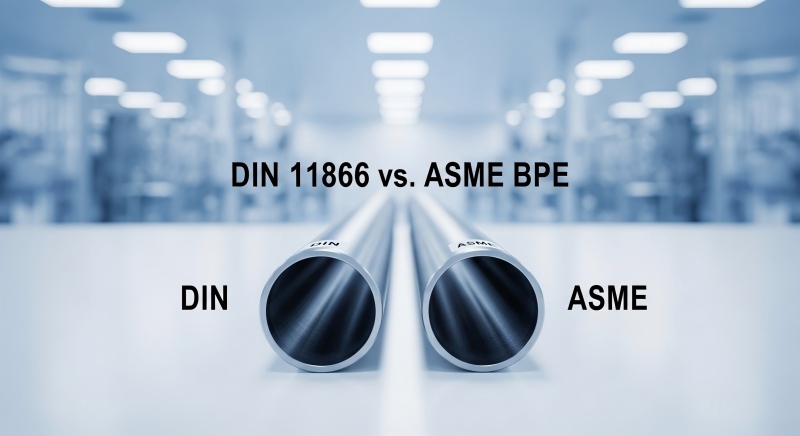
DIN 11866 vs. ASME BPE: Key Differences in Dimensions and Surface Finish
In the high-purity industries of pharmaceuticals, biotechnology, and food processing, selecting the right piping standard is not just about fit—it’s about compliance, sterility, and efficiency.
Two of the most dominant standards in the global market are DIN 11866 and ASME BPE.
At Sangyie, we frequently receive inquiries from engineers and procurement managers asking: "Can I mate a DIN component with an ASME BPE fitting?" or "Which standard offers better surface quality for my sterile process?"
This guide breaks down the critical differences between DIN 11866 and ASME BPE to help you make informed purchasing decisions for your sanitary valves, pumps, and piping systems.
Understanding the Basics: What are they?
ASME BPE (American Society of Mechanical Engineers - Bioprocessing Equipment) Originating in the USA, ASME BPE is the leading global standard specifically designed for the biopharmaceutical industry. It strictly regulates dimensions, surface finishes, and materials (specifically SS 316L) to ensure cleanability and sterility.
DIN 11866 (Deutsches Institut für Normung) This is a German standard for stainless steel tubes used in aseptic, chemical, and pharmaceutical applications. Here is the critical distinction: DIN 11866 is an "umbrella" standard that incorporates three different dimension series:
-
Series A: Matches DIN 11850 (Metric sizes).
-
Series B: Matches ISO 1127 (ISO sizes).
-
Series C: Matches ASME BPE dimensions (Imperial sizes).
H2: The Dimensional Conflict: Size Matters
The biggest risk in sourcing sanitary hardware is dimensional mismatch. A 2-inch ASME tube does not have the exact same Outer Diameter (OD) or Wall Thickness as a DN50 DIN tube.
Key Takeaway: If your facility uses ASME BPE specifications, you can use DIN 11866 Series C, as they share the same dimensions. However, Series A and Series B are not compatible with ASME BPE fittings without special adapters.
Comparison Table: Common Sizes (OD x Wall Thickness)
| Nominal Size | DIN 11866 Series A (DIN 11850) | DIN 11866 Series B (ISO 1127) | DIN 11866 Series C (ASME BPE) |
|---|---|---|---|
| DN 25 / 1" | 29.0 x 1.5 mm | 33.7 x 2.0 mm | 25.4 x 1.65 mm |
| DN 40 / 1.5" | 41.0 x 1.5 mm | 48.3 x 2.0 mm | 38.1 x 1.65 mm |
| DN 50 / 2" | 53.0 x 1.5 mm | 60.3 x 2.0 mm | 50.8 x 1.65 mm |
(Note: When ordering valves or high-shear mixers from us, please specify which Series or Standard your existing piping system utilizes to ensure perfect welding alignment.)
Surface Finish and Hygiene Classes (Ra Values)
In industries like semiconductor manufacturing and injectables, the internal surface roughness (Ra) is crucial to prevent biofilm buildup.
ASME BPE Surface Codes ASME BPE uses codes like SF1 (Mechanical Polish) and SF4 (Electropolish).
-
SF1: Max Ra 20 µin (0.51 µm) – Mechanical Polish.
-
SF4: Max Ra 15 µin (0.38 µm) – Electropolished.
DIN 11866 Hygiene Classes DIN standards classify hygiene levels (H1 to H5), which define the internal bead condition and roughness.
-
H3: Internal Ra < 0.8 µm (Standard hygiene).
-
H4: Internal Ra < 0.4 µm (High hygiene/Aseptic).
-
HE5: Electropolished, Ra < 0.25 µm (Biotech grade).
Verdict: Both standards offer extremely high-purity finishes suitable for WFI (Water for Injection) systems. However, ASME BPE is often more prescriptive regarding the specific "stain-free" requirements of electropolishing.
Which Standard Should You Choose?
-
Geographic Location:
-
North America & Global Biotech: ASME BPE is the gold standard.
-
Europe (DACH region): DIN 11866 Series A is very common in food and beverage processing.
-
-
Industry Application:
-
Pharmaceuticals & Semiconductors: Usually prefer ASME BPE or DIN 11866 Series C/HE5 due to rigorous documentation and electropolishing standards.
-
Food, Dairy & Brewing: DIN 11866 Series A or B is often sufficient and cost-effective.
-
We Manufacture for Both Standards
At [Insert Your Company Name], we understand that modern factories often contain a mix of equipment from different global suppliers.
We specialize in manufacturing high-precision sanitary components that meet your exact specifications:
-
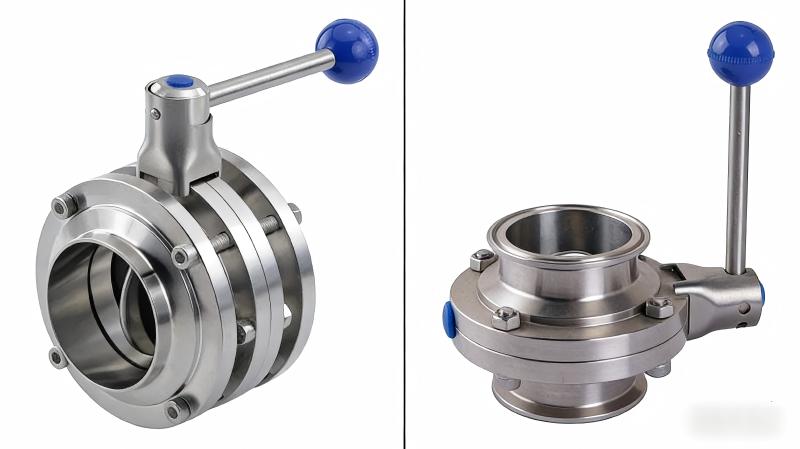
Sanitary Valves: Butterfly, Ball, and Diaphragm valves available in DIN Series A/B/C and ASME BPE.
-
Pumps & Mixers: Customized connections to fit your piping loop perfectly.
-
Fittings & Tubes: Certified materials with full traceability (MTRs).
Don't let compatibility issues delay your project. Whether you need a DIN-compliant butterfly valve or an ASME BPE electropolished fitting, our engineering team is here to help.
[Click Here to Contact Us / Visit our Website at www.sangyie.com / Email us at [info@sangyie.com]
Sangyie Technology — Engineering the Flow of Your Success.
Sanitary Air Relief Valve vs. Standard Air Compressor Relief Valve: Key Differences for Industrial Buyers
What are Sanitary Fittings? The Essential Guide for Hygienic Processing
Related Article

DIN 11866 is the overarching standard for aseptic systems that uses DIN 11850 as its "Series A" option.