DIN 11850: The cornerstone of industrial hygiene connectors - a key standard for pure and efficient production
In industries where hygiene and purity are paramount – such as food & beverage, dairy, pharmaceuticals, biotechnology, fine chemicals, and cosmetics – every component of the fluid transfer system is critical. Even minor contamination can lead to devastating consequences: product recalls, brand damage, and potential health risks for consumers. To navigate the increasingly stringent market and regulatory demands, selecting fluid connections that adhere to the highest standards is not just a preference, but a necessity.
Today, we delve into a highly influential German industrial standard that holds significant sway across Europe and globally: DIN 11850. It is not merely a benchmark for the quality of hygienic stainless steel pipe fittings; it is a foundational pillar for establishing a pure, efficient, and reliable production environment.
I. What is DIN 11850?
DIN stands for "Deutsches Institut für Normung," which translates to the German Institute for Standardization. DIN 11850 is a comprehensive set of German industrial standards specifically designed for stainless steel pipe fittings used in hygienic applications within the food, chemical, and pharmaceutical industries.
Its core scope includes:
-
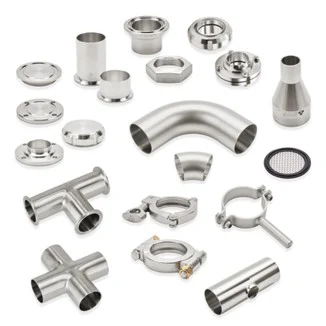
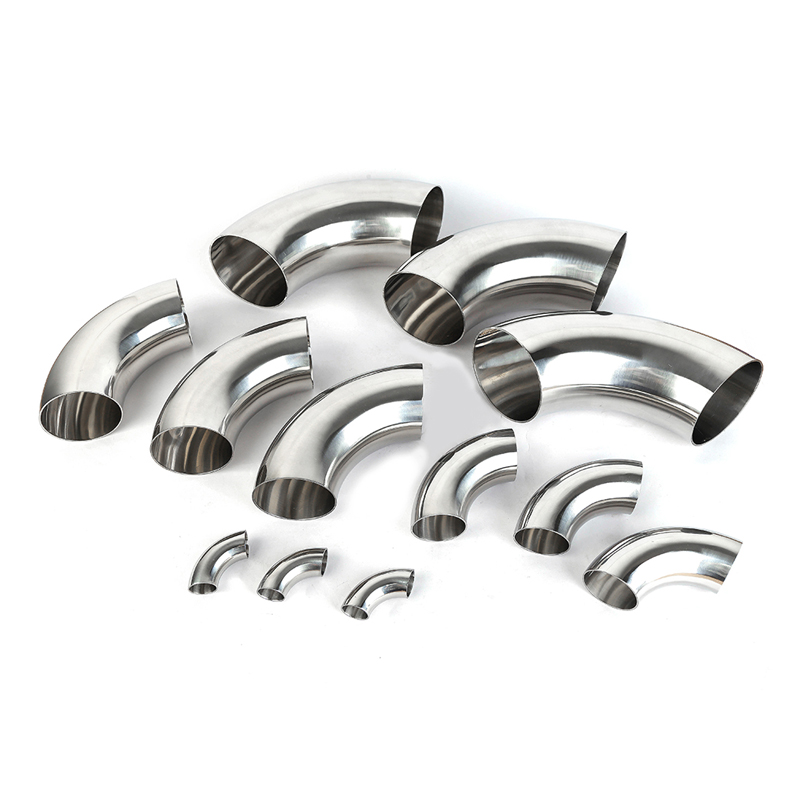
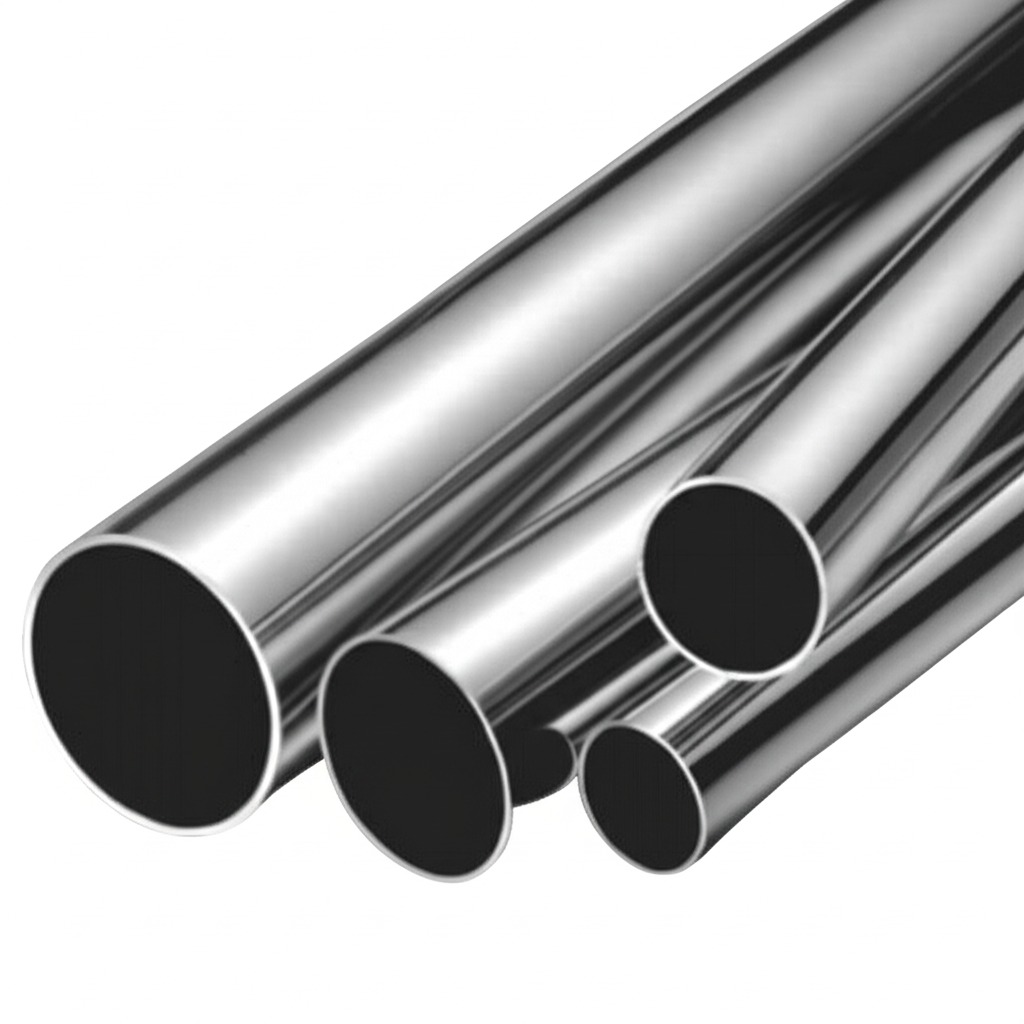
Dimensional Specifications: It meticulously defines the nominal diameters, wall thicknesses, lengths, and precise dimensions and tolerances for hygienic stainless steel pipes (e.g., straight pipes, elbows, tees, reducers) and their corresponding connection types (e.g., Clamp connections, Threaded connections).
-
Material Requirements: Typically mandates the use of materials like 304 and 316L stainless steel, which meet food-grade or pharmaceutical-grade requirements, ensuring excellent corrosion resistance and non-toxicity.
-
Surface Roughness Requirements: Sets strict limits on the internal surface roughness (Ra value) of product-contacting surfaces, aiming to minimize bacterial adhesion and fluid retention.
-
Design Principles: Emphasizes crevice-free, easy-to-clean, and smooth-transition designs to minimize the risk of cross-contamination.
In essence, DIN 11850 aims to ensure that hygienic fluid connections meet the highest levels of quality in terms of material, dimensions, surface finish, and design through unified and stringent standards. This ultimately guarantees the purity and safety of fluid transfer processes and enables the interchangeability of products from different manufacturers.
II. Why is DIN 11850 So Important?
The significance of the DIN 11850 standard is evident across multiple critical areas:
-
Ultimate Hygienic Assurance: Eliminating Contamination Sources
-
Crevice-Free Design: The standard imposes strict requirements on the internal structure and surface finish of connections, ensuring smooth fluid flow without creating dead spaces or areas for liquid retention where bacteria and microorganisms can thrive.
-
Optimized for Thorough Cleaning (CIP/SIP): The specified low surface roughness (e.g., Ra ≤ 0.8μm, or even lower to ≤ 0.4μm for critical applications) ensures that the inner surfaces of connections are smooth and highly effective for Clean-In-Place (CIP) and Sterilize-In-Place (SIP) processes, significantly reducing the risk of cross-contamination.
-
-
Ensuring Product Purity & Safety: The Foundation of Consumer Trust
-
Food-Grade/Pharmaceutical-Grade Materials: By mandating the use of corrosion-resistant and non-leaching 304 or 316L stainless steel, the standard guarantees that the transferred medium remains uncontaminated by the material itself, ensuring the purity of the final product.
-
Regulatory Compliance: Adherence to DIN 11850 helps companies meet increasingly stringent hygiene and safety regulations for food and pharmaceutical production equipment worldwide.
-
-
Excellent Interchangeability & Compatibility: Boosting Production Flexibility
-
Standardized Dimensions: The precise dimensional tolerances defined by DIN 11850 ensure that pipe fittings and valves from different manufacturers, all compliant with this standard, can be perfectly matched and seamlessly connected. This grants procurement managers greater flexibility in sourcing components without compatibility concerns.
-
Simplified Maintenance and Upgrades: Standardization significantly streamlines the installation, maintenance, and upgrading processes of production lines, reducing downtime and increasing overall efficiency.
-
-
Boosting Production Efficiency & Lowering Operational Costs: Driving Economic Benefits
-
Rapid Installation & Maintenance: The standardized design and high-precision manufacturing enable quicker installation and disassembly of connections, effectively reducing production line downtime.
-
Extended Equipment Lifespan: High-quality materials and rigorous design reduce wear and corrosion, extending the service life of the entire fluid transfer system, which in turn lowers replacement frequency and maintenance costs.
-
Reduced Scrap Rates & Recall Risks: Lower hygiene risks directly translate to stable product quality, minimizing product spoilage due to contamination and avoiding significant economic losses and brand damage from market recalls.
-
-
International Recognition & Market Passport: Expanding Global Business
-
As a leading European industrial standard, DIN 11850 enjoys high recognition and acceptance globally, especially within the European market. Products conforming to this standard are more readily trusted by international clients and serve as an essential "passport" for market entry and circulation worldwide.
-
III. Key Technical Requirements of DIN 11850 (Overview)
While DIN 11850 is a detailed standard, its core technical requirements can be summarized as follows:
-
Material: Typically specifies austenitic stainless steel, such as 1.4301 (AISI 304) and 1.4404 (AISI 316L).
-
Surface Roughness (Ra Value): For product-contacting internal surfaces, the Ra value is generally required to be no more than 0.8μm. For highly critical hygienic applications, Ra values lower than 0.4μm may be specified.
-
Dimensional Tolerances: Precise tolerances are defined for the outer and inner diameters, wall thickness, length, roundness, and other critical dimensions of pipes and fittings.
-
Design: Emphasizes seamless connections, crevice-free internal surfaces, smooth transitions, and designs that facilitate easy drainage and cleaning.
-
Seals: Specifies requirements for sealing materials (e.g., EPDM, FKM, Silicone) and their design to ensure effective sealing and resistance to the conveyed media at specified operating temperatures.
IV. Who Needs to Pay Attention to DIN 11850?
Any industry or company with stringent hygiene requirements for their fluid transfer systems should prioritize adherence to DIN 11850:
-
Food & Beverage Producers: Especially in dairy, brewing, juice, and soft drink sectors.
-
Pharmaceutical Companies: From raw material preparation to final drug formulation and packaging.
-
Biotechnology Companies: Production of vaccines, diagnostic reagents, and biopharmaceuticals.
-
Fine Chemical & Cosmetics Industries: Production involving high-purity chemicals or easily contaminated products.
-
Equipment Manufacturers & Engineering Firms: To ensure their supplied fluid systems meet clients' highest hygienic demands.
-
Distributors & Traders: Understanding the standard is key to selecting and recommending high-quality products.
V. Our Connection to DIN 11850: Your Reliable Partner
As a professional supplier of fluid connection solutions, we deeply understand the paramount importance of standards in ensuring product quality and customer satisfaction. Our product line, particularly our hygienic stainless steel connections designed for the food, pharmaceutical, and chemical industries, are rigorously designed and manufactured in strict accordance with DIN 11850 and other relevant international standards (such as SMS, ISO, and ASME BPE).
-
Quality Commitment: From the selection of premium 304/316L stainless steel raw materials to the adoption of advanced precision machining processes, and through to the rigorous quality control checks on every single product, we strive for perfection. This ensures that every connection leaving our facility boasts exceptional surface finish, precise dimensions, and superior corrosion resistance.
-
Expertise: Our experienced R&D, production, and sales teams are dedicated to providing you with professional consultations and tailored solutions.
-
Value Proposition: Choosing our DIN 11850 compliant connections means you are opting for reliability, high quality, and optimal compatibility. This will help your enterprise minimize contamination risks, boost production efficiency, and effortlessly meet the strict regulatory demands of global markets, thereby maintaining a competitive edge.
Conclusion: Investing in Standards is Investing in the Future
In summary, DIN 11850 is far more than a simple set of specifications for dimensions and materials. It is a powerful instrument that underpins safety, product purity, and efficiency in critical industrial sectors like food, pharmaceuticals, and chemicals. In an increasingly regulated global market, choosing fluid connections that conform to this standard is undoubtedly a wise and responsible investment.
We sincerely invite you to consider our high-quality, DIN 11850 compliant fittings when building or upgrading your production lines.
Conquering Clogging & Abrasion: Choosing the Right Valve for Slurries & Viscous Liquids
Sangyie New Control unit and Positioner
Related Article

DIN 11866 is the overarching standard for aseptic systems that uses DIN 11850 as its "Series A" option.