Sanitary Twin Screw Pump Buyer's Guide: Specifications and Selection for 2025
Introduction: The Critical Role of Sanitary Twin Screw Pumps in Modern Industry
In the highly regulated world of industrial processing, where product purity and process efficiency are paramount, sanitary twin screw pumps have emerged as indispensable assets across food, beverage, pharmaceutical, and biotechnology sectors. These specialized pumps represent a significant evolution in pumping technology, specifically engineered to meet the stringent hygiene standards required in sensitive manufacturing environments while handling challenging fluid dynamics that would compromise other pump types.
The global market for sanitary pumps continues to expand steadily, with the overall sector projected to grow at a CAGR of 4.2% from 2025 to 2031, reaching approximately $6.64 billion by 2031. Within this market, screw pumps specifically held a global market size of approximately $500 million in 2024, with projections indicating growth to about $700 million by 2031—a compound annual growth rate of roughly 5%. This growth trajectory underscores the increasing recognition of twin screw pumps as critical components in modern processing lines, particularly as manufacturers seek solutions that can handle diverse product characteristics while maintaining uncompromising sanitary conditions.
This comprehensive guide will equip you with the knowledge needed to navigate the complex selection process for sanitary twin screw pumps in 2025, examining key specifications, application-specific considerations, and emerging industry trends that will influence your purchasing decision.
Understanding Twin Screw Pump Technology: Core Principles and Advantages
Fundamental Operating Mechanism
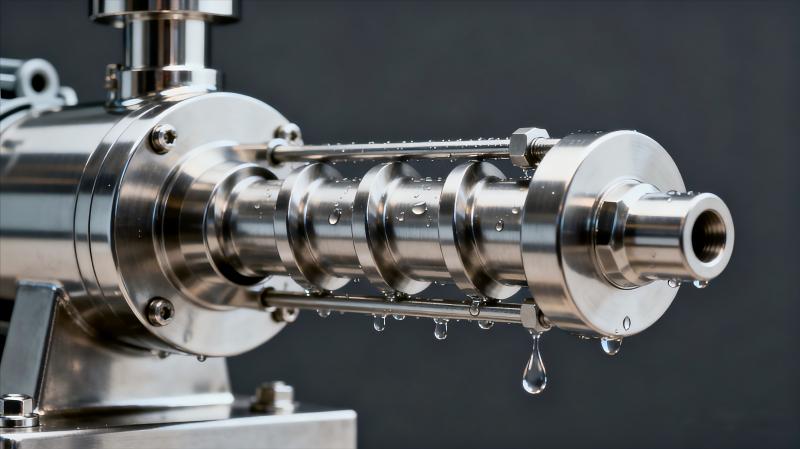
At its core, a sanitary twin screw pump operates on the principle of positive displacement through the synchronized rotation of two parallel, intermeshing screws within a precisely machined housing. Unlike single screw designs that rely on stator contact, twin screw pumps feature non-contacting rotors that rotate in opposite directions, creating a series of sealed chambers that move fluid axially from the inlet to the discharge port. This design eliminates metal-to-metal contact within the pump chamber, a critical feature that enables the handling of non-lubricating, corrosive, and non-homogeneous media without risk of damage or excessive wear.
The unique screw profile and timing gear arrangement allow the pumps to maintain their clearance integrity even under varying pressure conditions, ensuring consistent performance throughout their service life. This engineering sophistication translates to several operational advantages that make twin screw pumps particularly suited for sanitary applications.
Key Advantages in Sanitary Applications
-
Gentle Product Handling: The low-pulse, continuous flow characteristic of twin screw pumps preserves product integrity, making them ideal for handling shear-sensitive materials like creams, emulsions, and protein-based solutions that might be damaged by other pump types. Unlike centrifugal pumps that impart significant hydraulic shear, or rotary lobe pumps that compress product between rotors and housing, twin screw pumps move materials with minimal agitation.
-
Exceptional Versatility: Twin screw pumps demonstrate remarkable flexibility in handling viscosities ranging from 1 to over 3,000,000 mPa·s and can manage products containing particulates up to 40mm in diameter. This broad operating window allows processors to use a single pump technology across multiple products or processing steps, simplifying spare parts inventory and operator training.
-
Superior Sanitation Characteristics: Designed specifically for hygienic applications, these pumps feature polished surfaces, minimal dead spaces, and clean-in-place (CIP) capabilities that support rigorous sanitation protocols. Many advanced models can handle both product transfer and cleaning cycles, eliminating the need for separate CIP pumps and associated piping.
-
High Efficiency Across Operating Conditions: Unlike centrifugal pumps whose performance varies significantly with viscosity changes, twin screw pumps maintain consistent flow rates regardless of pressure or viscosity fluctuations. This efficiency translates to lower energy consumption, particularly with high-viscosity products where centrifugal pumps would require significantly more power.
-
Reversible Flow Capability: A particularly useful feature in sanitary processing is the ability to reverse flow direction simply by changing shaft rotation. This allows for flexible piping designs and enables backflushing procedures without additional valves or piping modifications.
Key Specifications and Technical Considerations for 2025
Navigating the specification landscape for sanitary twin screw pumps requires understanding both the current standards and emerging trends that will define pump technology in the coming years. The following parameters should form the foundation of your evaluation process.
Performance Metrics
-
Flow Rate Capacity: Twin screw pumps for sanitary applications typically cover a flow range from as low as 40L/h to 150 tons per hour, with specific models like the NOTOS® 2NSH series capable of handling higher flow requirements. When selecting capacity, consider both your immediate needs and potential future requirements, allowing for approximately 15-20% additional capacity for operational flexibility without significantly oversizing.
-
Pressure Capabilities: Standard sanitary twin screw pumps generally operate effectively at discharge pressures up to 16 bar, with specialized designs capable of reaching 25 bar (2.5 MPa) for demanding applications. Consider both the steady-state operating pressure and any potential pressure spikes that might occur during process upsets.
-
Temperature Range: While specific temperature ratings vary by manufacturer, most sanitary twin screw pumps can handle product temperatures from cryogenic ranges up to 200°C, accommodating everything from chilled food products to hot CIP solutions. Verify both the temperature limits of the pump itself and any ancillary components like mechanical seals.
-
Speed and Drive Options: Modern twin screw pumps can operate at speeds up to 3600 rpm, with variable frequency drives (VFDs) becoming standard for precise flow control. The integration of ABB, Siemens, or other premium motors ensures reliable operation and facilitates seamless integration with plant control systems.
Construction and Material Considerations
-
Material Specifications: For sanitary applications, SS316L stainless steel has become the material of choice for wetted components, offering superior corrosion resistance compared to SS304. Surface finishes of <0.8 μm Ra (32 μin) are standard for product contact surfaces, with electropolishing increasingly specified for enhanced cleanability and corrosion resistance.
-
Seal Technology: Mechanical seal options have expanded significantly, with single, double, and gas barrier seals available to match specific application requirements. For pharmaceutical and biotechnology applications, sterile steam barrier seals have become commonplace to prevent microbial ingress.
-
Hygienic Connections: While tri-clamp connections remain popular for their disassembly ease, DIN/SMS flange connections continue to be specified for certain applications and geographic regions. Consider the connection standards already established in your facility to minimize adaptation requirements.
Application-Specific Selection Guidelines
Food and Beverage Industry
In food and beverage applications, twin screw pumps must address both processing efficiency and stringent hygiene standards. For dairy applications like yogurt, cream cheese, or cultured products, specify pumps with gentle handling characteristics to maintain product texture and viscosity. In beverage processing, consider pumps capable of handling particulates found in fruit preparations or pulp-containing products without damage.
The bakery and confectionery sectors often employ twin screw pumps for high-viscosity materials like chocolate, fillings, and doughs, where their self-priming capabilities and pressure stability ensure consistent product quality. For these applications, consider pumps with jacketed housings to maintain product temperature and specify appropriate stator materials compatible with fat-based systems.
Pharmaceutical and Biotechnology Applications
The pharmaceutical sector presents perhaps the most demanding requirements for sanitary pumps, with validation, cleanability, and product containment as primary considerations. For bioreactor feeding, buffer preparation, and final product transfer, specify pumps with full 3-A and FDA compliance and documentation packages that support regulatory submissions.
In active pharmaceutical ingredient (API) production, twin screw pumps handle solvent-based systems and potent compounds, making double mechanical seals with alarm provisions essential for operator protection. For sterile applications, pumps capable of withstanding repeated SIP (Steam-in-Place) cycles at temperatures up to 140°C are necessary, with specific material selections to accommodate thermal expansion differences.
Personal Care and Cosmetics
The cosmetics industry leverages twin screw pumps for their ability to handle emulsions, suspensions, and viscous bases without compromising product structure. When selecting pumps for these applications, consider materials compatible with alcohol-based systems, abrasive exfoliants, and fragrance compounds that might attack certain elastomers.
For lotions, creams, and toothpaste formulations, the pump's ability to maintain consistent flow against varying backpressures ensures uniform filling operations and product consistency. In these environments, the aesthetic appearance of the pump itself often becomes a consideration in cleanroom settings where equipment appearance reflects on brand quality.
Comparative Analysis: Twin Screw Pumps vs. Alternative Technologies
Understanding how twin screw pumps compare to other sanitary pump technologies clarifies their appropriate application range and helps justify their selection for specific processing challenges.
| Pump Type | Optimal Viscosity Range | Particulate Handling | Shear Sensitivity | Relative Cost |
|---|---|---|---|---|
| Twin Screw | 1 - 3,000,000+ mPa·s | Excellent (up to 40mm) | Very Low | High |
| Centrifugal | < 500 mPa·s | Poor | High | Low |
| Rotary Lobe | 1 - 1,000,000 mPa·s | Good | Low | Medium |
| Progressive Cavity | 1 - 1,000,000 mPa·s | Very Good | Low | Medium |
Table: Performance comparison of sanitary pump technologies for various fluid characteristics
As the data illustrates, twin screw pumps offer the broadest operating window in terms of viscosity and particulate handling, making them uniquely suited for processes with significant product variations or multiple applications. While their initial investment exceeds other technologies, their operational flexibility and reduced maintenance requirements often deliver superior lifetime cost efficiency in demanding applications.
Leading Manufacturers and Market Overview
The global sanitary twin screw pump market features several established manufacturers, each with particular strengths and specialized offerings. The competitive landscape includes:
-
Global Leaders: Companies like GEA Group, Alfa Laval, SPX FLOW, and Netzsch have extensive experience in sanitary processing and offer comprehensive pump ranges with robust support networks. These manufacturers typically provide advanced technical support, extensive application expertise, and global spare parts availability.
-
Specialized Manufacturers: Firms such as Jung Process Systems GmbH focus specifically on sanitary twin screw pumps, offering customized solutions for challenging applications. These specialists often provide greater design flexibility and deeper application knowledge in specific market segments.
-
Regional Suppliers: Particularly in the Asian market, manufacturers like Hundom, Shanghai Tiantian Pump, and Huangshan RSP Manufacturing offer competitive alternatives with cost advantages and responsive service for regional requirements.
When evaluating suppliers, consider both the initial equipment cost and the total cost of ownership, including energy consumption, maintenance requirements, and potential production impacts from unscheduled downtime. The emergence of IIoT-enabled pumps from major manufacturers represents a significant advancement, offering predictive maintenance capabilities and performance monitoring that can reduce lifetime operating costs.
Emerging Trends and Future Developments (2025 and Beyond)
The sanitary pump industry continues to evolve, with several significant trends shaping product development and selection criteria for the coming years:
-
Digitalization and IIoT Integration: Leading manufacturers are increasingly incorporating smart sensors and communication protocols that enable real-time performance monitoring and integration with plant management systems. These developments support predictive maintenance strategies, reducing unplanned downtime and optimizing replacement part inventory.
-
Energy Efficiency Focus: With rising energy costs and sustainability initiatives, pump selection increasingly emphasizes lifecycle energy consumption. Twin screw pumps, with their high efficiency across variable operating conditions, are well-positioned to benefit from this trend, particularly in energy-intensive applications.
-
Enhanced Cleanability Features: Regulatory pressure continues to drive design innovations aimed at reducing cleaning time and resource consumption. Expect to see optimized fluid pathways, improved surface finishes, and advanced seal technologies that further enhance clean-in-place effectiveness while reducing water and chemical usage.
-
Modular and Scalable Designs: Manufacturers are responding to industry needs for flexibility with modular pump designs that can be reconfigured for changing process requirements. This approach extends equipment service life and protects investments against evolving production needs.
-
Advanced Materials Development: The ongoing development of specialized steels, composite materials, and surface treatments promises enhanced corrosion resistance and wear characteristics, particularly important when handling abrasive or corrosive media in sanitary applications.
Selection Checklist: Critical Considerations for 2025 Purchases
As you evaluate sanitary twin screw pumps for your application, use this comprehensive checklist to ensure all critical factors have been addressed:
-
Application Requirements: Document full operating parameters including viscosity ranges, particulate characteristics, temperature profiles, and shear sensitivity.
-
Capacity Planning: Verify pump sizing based on both current and anticipated future requirements, considering potential production expansions.
-
Material Compatibility: Confirm wetted materials compatibility with both product and cleaning chemicals, including elastomer selections.
-
Regulatory Compliance: Ensure pump meets relevant 3-A, FDA, EHEDG, or other industry-specific standards for your application and markets.
-
Cleanability Validation: Request documentation supporting CIP/SIP validation, including independent testing results where available.
-
Service and Support: Evaluate manufacturer's local support capabilities, spare parts availability, and technical expertise.
-
Total Cost Analysis: Consider initial investment, installation, energy consumption, and projected maintenance costs over a 5-7 year horizon.
-
Future-Proofing: Assess compatibility with plant digitalization strategies and potential for IIoT integration.
Conclusion: Strategic Implementation for Optimal Results
Selecting the appropriate sanitary twin screw pump requires careful consideration of both current needs and future operational challenges. The versatility, efficiency, and reliability of modern twin screw pumps make them excellent choices for demanding sanitary applications across multiple industries. As we look toward 2025, the convergence of digitalization, sustainability initiatives, and evolving regulatory requirements will make informed pump selection even more critical to operational success.
By applying the comprehensive framework presented in this guide, you can confidently navigate the selection process, avoiding common pitfalls while maximizing the return on your capital investment. The right sanitary twin screw pump, properly specified and installed, will deliver years of reliable service while supporting your product quality and operational efficiency goals.
Remember that the most successful implementations involve early collaboration with reputable suppliers who can provide specific application expertise and demonstrate proven experience in your industry segment. With their guidance and the parameters outlined in this guide, you can make a selection decision that delivers optimal value throughout the equipment lifecycle.
[Click Here to Contact Us / Visit our Website at www.sangyie.com / Email us at [info@sangyie.com]
Sangyie Technology — Engineering the Flow of Your Success.
Comparing Sanitary Pump Technologies: Why Choose a Sine Pump for Gentle Product Handling
5 Mistakes Most Food & Dairy Companies Make When Choosing Hygienic Centrifugal Pumps (And How to Avoid Them)
Related Article

DIN 11866 is the overarching standard for aseptic systems that uses DIN 11850 as its "Series A" option.