The Ultimate Buyer's Guide to Sanitary Diaphragm Valves for Food & Pharma Industries
At Sangyie, with our decades of experience in manufacturing high-purity fluid handling equipment, we've crafted this comprehensive guide to help you navigate the key factors in choosing the perfect diaphragm valve for your application in the food, pharmaceutical, and biotechnology sectors.
Why Diaphragm Valves? The Gold Standard for Hygiene
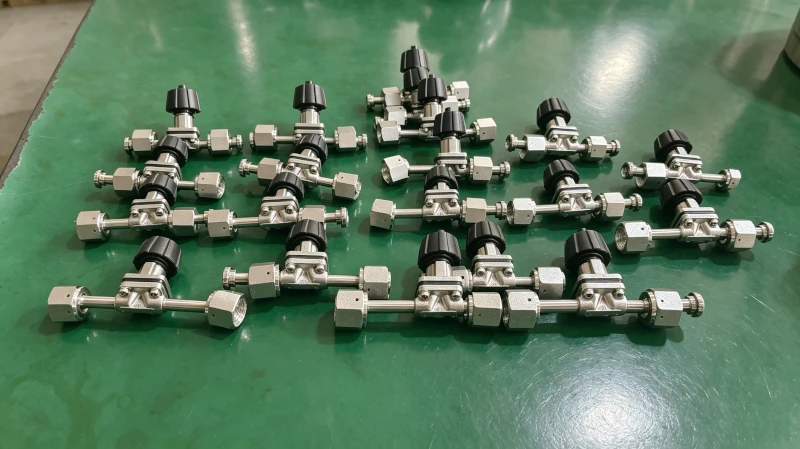
Sanitary diaphragm valves are the preferred choice in applications where hygiene, sterility, and contamination control are non-negotiable. Their unique design features a flexible diaphragm that isolates the process media from the valve's internal mechanism. This offers several unbeatable advantages:
-
Zero Contamination: The media only contacts the diaphragm and the valve body, eliminating dead legs and crevices where bacteria can thrive.
-
Exceptional Sealing: Provides a bubble-tight seal, crucial for maintaining sterile integrity during processes like CIP (Clean-in-Place) and SIP (Sterilize-in-Place).
-
Minimal Maintenance: With no internal packing or seals that can wear out and contaminate the line, diaphragm valves are incredibly reliable and easy to maintain.
Key Considerations for Choosing Your Sanitary Diaphragm Valve
Here are the top 10 factors every procurement specialist and engineer must evaluate:
1. Material Selection: Body and Diaphragm
The compatibility of materials with your process media (including cleaning and sanitizing agents) is paramount.
-
Valve Body: 316L stainless steel is the industry standard. Ensure it has a high-quality electropolished finish (typically Ra ≤ 0.38 µm) for optimal cleanability and corrosion resistance.
-
Diaphragm: This is the heart of the valve. Common options include:
-
EPDM: Excellent for hot water and steam (SIP), good for acids and alkalis.
-
Silicone: Ideal for high-purity applications, excellent flexibility, and neutral taste/odor transfer (perfect for food & beverage).
-
PTFE (Teflon) / FKM (Viton): Offer superior chemical resistance for harsh solvents and aggressive chemicals common in pharma.
-
2. Connections and Surface Finish
Ensure the valve ends match your existing pipeline connections (e.g., Tri-Clamp, DIN, SMS, ISO). The surface finish, often measured by Ra (Roughness Average), should meet industry standards like 3-A for food or ASME BPE for pharmaceutical and biotech to prevent bacterial adhesion.
3. Actuation Type: Manual vs. Automated
-
Manual Handwheel: Cost-effective for valves that are infrequently operated or in easily accessible locations.
-
Pneumatic Actuation: Essential for automated processes, remote control, and integration into PLC systems. Ideal for large-scale operations or valves in hard-to-reach areas.
-
Electric Actuation: Offers precise control and is excellent for applications requiring complex sequencing or where plant air is not available.
Sangyie offers all three options and provides expert guidance on the most efficient and cost-effective solution for your production line.
4. Understanding Industry Standards and Certifications
Always look for valves that are manufactured in compliance with recognized standards. This is not just a formality; it's a guarantee of safety and quality.
-
Food & Dairy: 3-A Sanitary Standards symbol authorization.
-
Pharma & Biotech: ASME BPE guidelines.
-
General Hygiene: EHEDG and FDA compliance for materials in contact with media.
5. Temperature and Pressure Ratings
Verify that the valve's specifications comfortably exceed your process's maximum operating temperature and pressure, including during CIP/SIP cycles where temperatures can spike.
Sangyie's Expertise: Engineered for Your Peace of Mind
At Sangyie, we don't just sell valves; we provide solutions. Our diaphragm valves are engineered with the insights gained from serving global leaders in the food, beverage, and pharmaceutical industries.
-
Precision Engineering: Every valve is machined to impeccable tolerances, ensuring perfect alignment and leak-free performance.
-
Superior Diaphragm Life: Our proprietary diaphragm formulations and design maximize cycle life, reducing downtime and total cost of ownership.
-
Full Customization (OEM/ODM): We understand that every process is unique. We offer custom porting, actuation solutions, and material combinations to meet your exact specifications.
Conclusion: Make an Informed Investment
Choosing a diaphragm valve is an investment in your product quality and operational efficiency. By focusing on the factors outlined in this guide—materials, design, standards, and actuation—you can select a valve that delivers reliability, compliance, and value for years to come.
Ready to Find Your Perfect Valve Solution?
Navigating these choices is easier with an expert partner. The Sangyie team is here to help.
-
Download our detailed Technical Specification Sheet for a side-by-side comparison of our diaphragm valve series.
-
Have a specific application challenge? Contact our application engineers for a free, no-obligation consultation. We'll help you specify the right valve for your needs.
-
Browse our full range of Sanitary Diaphragm Valves to see our standard and custom offerings.
[Click Here to Contact Us / Visit our Website at www.sangyie.com / Email us at [info@sangyie.com]
Sangyie Technology — Engineering the Flow of Your Success.
Global Sourcing Guide for ASME BPE Compliant Hygienic Angle Seat Valves in 2025
The Ultimate Guide to Sanitary Ball Valves: Types, Applications & Selection Criteria
Related Article

DIN 11866 is the overarching standard for aseptic systems that uses DIN 11850 as its "Series A" option.