Pressure Retaining Valve: A Buyer's Guide for Industrial Applications
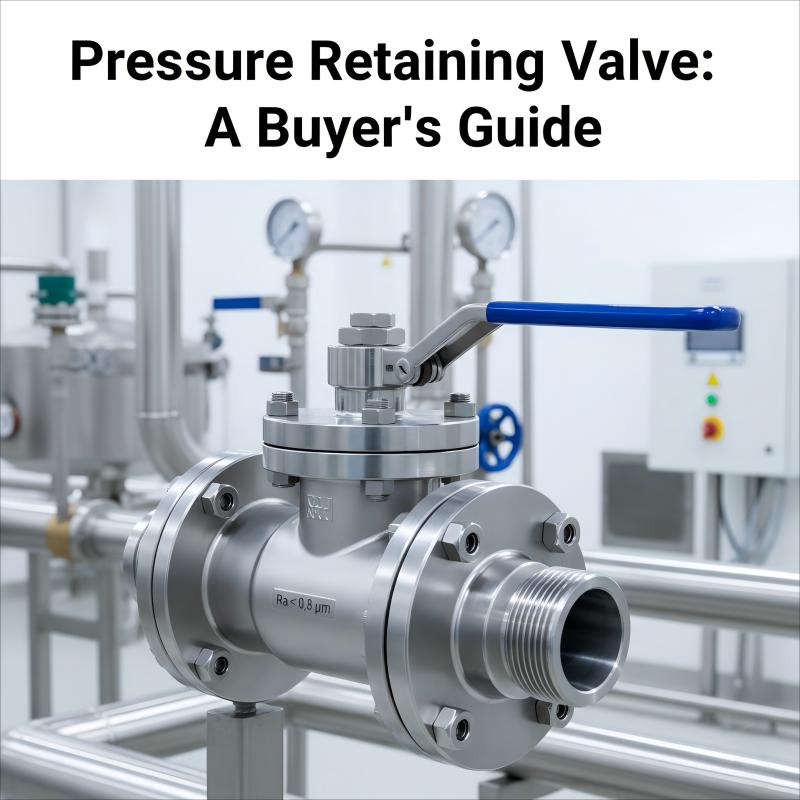
When specifying components for a critical industrial process, the choice of a pressure retaining valve can significantly impact your system's efficiency, safety, and product quality. Whether you're in food & beverage, pharmaceutical, or biotechnology, selecting the right valve is not just a purchase—it's an investment in your operation's integrity.
At Sangyie, a leading manufacturer of sanitary fluid handling solutions, we understand that engineers and procurement specialists need clear, reliable information. This comprehensive buyer's guide is designed to help you make an informed decision when selecting a pressure retaining valve for your application.
What is a Pressure Retaining Valve and How Does It Work?
A pressure retaining valve (PRV) is an automatic control valve designed to maintain a minimum upstream pressure in a fluid system. Unlike pressure-reducing valves that lower downstream pressure, a PRV ensures that pressure does not fall below a pre-set critical point.
How it works: The valve is held closed by a spring mechanism set to the desired minimum pressure. When the upstream pressure drops below this setpoint, the spring force closes the valve, preventing further pressure loss. Once pressure is restored, the valve reopens, allowing flow to continue. This is essential for:
-
Preventing pump cavitation.
-
Ensuring consistent flow to critical equipment.
-
Maintaining prime in suction lines.
-
Guaranteeing optimal conditions for processes like filtration or heat exchange.
Key Selection Criteria for Your Pressure Retaining Valve
Choosing the wrong valve can lead to downtime, contamination, and costly repairs. Here are the critical factors to consider:
-
Material of Construction:
-
Stainless Steel (316L): The standard for corrosion resistance. Ideal for most applications.
-
Sanitary Finishes: For food, dairy, and pharmaceutical industries, valves with Electropolished surfaces and Ra < 0.8 µm mirror finishes are mandatory for cleanability, a specialty of Sangyie.
-
-
Hygienic Design & Cleanability:
-
Look for valves with Zero Dead Leg design and self-draining capabilities to eliminate areas where bacteria and product can accumulate. All Sangyie pressure retaining valves are designed with these strict sanitary standards in mind.
-
-
Pressure and Temperature Ratings:
-
Ensure the valve's PSI and temperature range exceed your process's maximum requirements. Consider both steady-state and peak conditions.
-
-
Connection Types:
-
Choose from Tri-Clamp (for superior sanitation), DIN/SMS, Butt Weld, or NPT connections based on your existing pipeline.
-
-
Certifications and Compliance:
-
For regulated industries, certifications like 3-A, EHEDG, FDA, and ASME BPE are non-negotiable. Sangyie products are engineered to meet these rigorous global standards.
-
Industrial Applications: Where Are Pressure Retaining Valves Critical?
-
Food & Beverage: Maintaining pressure on filter membranes, ensuring consistent flow to fillers, and protecting sensitive equipment from pressure drops.
-
Pharmaceutical & Biotech: Crucial in maintaining pressure in chromatography systems, bioreactors, and ultrafiltration skids to ensure batch consistency and product yield.
-
Dairy & Brewing: Preventing pressure loss in CIP (Clean-in-Place) systems and ensuring steady flow through pasteurizers.
Why Choose Sangyie as Your Pressure Retaining Valve Supplier?
While the technical specs are vital, the manufacturer's expertise and quality make the final difference. Here’s why global industry leaders trust Sangyie:
-
Uncompromising Quality: Every Sangyie pressure retaining valve is precision-machined and undergoes rigorous testing to ensure leak-proof operation and long service life.
-
Deep Industry Expertise: We don't just sell valves; we provide solutions. Our engineering team has deep experience in your specific industry, from cosmetics to semiconductor manufacturing.
-
Full Customization: Need a specific port size, a unique pressure setting, or a special material? We offer custom pressure retaining valves tailored to your exact process requirements.
-
Global Support & Reliability: As an established manufacturer, we guarantee consistent quality and reliable supply chains, backed by responsive technical support.
Frequently Asked Questions (FAQ)
Q: What's the difference between a pressure retaining valve and a pressure relief valve? A: A pressure retaining valve maintains minimum upstream pressure. A pressure relief valve (or safety valve) protects a system from overpressure by releasing excess pressure. They serve opposite but equally important functions.
Q: Can Sangyie provide valves for high-purity water systems? A: Absolutely. Our valves with electropolished finishes and zero dead leg design are ideal for WFI (Water for Injection) and UPW (Ultra-Pure Water) systems in the pharmaceutical and semiconductor industries.
Q: How do I determine the correct spring setting for my application? A: Our technical team can assist you in selecting the perfect spring setting based on your system's pump curves and process requirements. Contact us for a free consultation.
Conclusion: Make an Informed Choice with Sangyie
Selecting the right pressure retaining valve is a technical decision that directly affects your bottom line. By understanding the principles, selection criteria, and trusting a manufacturer with proven expertise, you can ensure system safety, efficiency, and product quality.
Ready to specify the perfect valve for your system?
Explore the Sangyie Pressure Retaining Valve Series today. View technical datasheets, 3D drawings, and specifications on our product page, or contact our engineering specialists for personalized support.
[Click Here to Contact Us / Visit our Website at www.sangyie.com / Email us at [info@sangyie.com]
Sangyie Technology — Engineering the Flow of Your Success.
Sanitary vs Standard Air Relief Valves: Key Differences & Application Guide
National Day Holiday Notice
Related Article

DIN 11866 is the overarching standard for aseptic systems that uses DIN 11850 as its "Series A" option.