The Complete Guide to Hygienic Double Seat Valves: Ensuring Safety in Food, Beverage & Pharmaceutical Processing
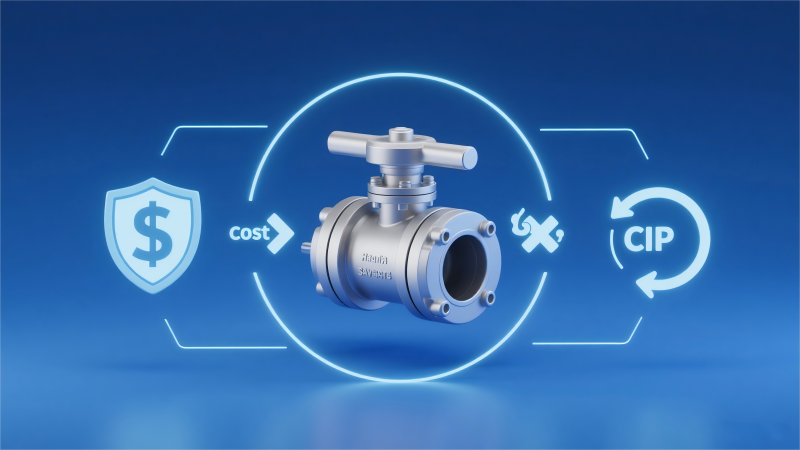
This is why hygienic double seat valves became non-negotiable in our industry.
What Exactly Are Hygienic Double Seat Valves - And Why Should You Care?
Think of double seat valves as the security checkpoint of your processing line. They feature two independent sealing seats with a space between them that acts as a safety zone. If one seal fails (which happens more often than manufacturers admit), the second seal contains the media while the leakage chamber alerts operators to the problem before cross-contamination occurs.
We've designed these valves to address the real-world problems our customers face daily:
The Hidden Costs of Valve Failure
Most procurement managers focus on upfront costs, but let's talk about what really matters:
-
Product recall costs (averaging $10M according to FDA data)
-
Production downtime ($5,000-$25,000 per hour in food processing)
-
Brand reputation damage (often irreparable)
Why Our Engineers Designed These Valves Differently
After interviewing over 200 plant managers across North America and Europe, we identified three critical needs that standard valves weren't addressing:
1. The Cleanability Challenge
Traditional valves with dead zones and rough surfaces become breeding grounds for bacteria. Our solution:
-
Radial seal technology that eliminates crevices
-
Electropolished 316L stainless steel with Ra ≤ 0.6 μm surface finish
-
45-degree seat design that prevents particle accumulation
2. The Maintenance Nightmare
I've watched maintenance teams spend hours dismantling valves for cleaning. Our design features:
-
Quick-release mechanisms that reduce disassembly time by 70%
-
Visual position indicators that show valve status at 20 meters
-
Standardized parts that work across multiple valve sizes
3. The Compliance Maze
With regulations changing constantly, we built valves that exceed:
-
3-A Sanitary Standards (certification # [Number])
-
EHEDG Type EL Class I certification
-
FDA 21 CFR 177.2600 compliance
-
EU 1935/2004 requirements
Real-World Applications Where Our Valves Made The Difference
Case Study: Major Yogurt Producer in Canada
Problem: Seasonal flavor changeovers required 12 hours of downtime for cleaning and validation
Our Solution: Installed our double seat valves with CIP capabilities
Result: Changeover time reduced to 3 hours, saving $18,000 per changeover
Case Study: Pharmaceutical Company in Germany
Problem: Sterility failures in water-for-injection system
Our Solution: Implemented our steam-in-place compatible valves
Result: Zero contamination events in 24 months of operation
The Technical Details That Matter (Without the Jargon)
Yes, our valves have impressive specs:
-
Pressure rating: 10 bar (we test every valve to 15 bar)
-
Temperature range: -20°C to 150°C (short-term to 180°C)
-
Connection types: We support all standards - DIN, SMS, Clamp, ISO
But what really matters is how they perform when:
-
Your cleaning crew is behind schedule
-
The graveyard shift is running complex changeovers
-
FDA auditors show up unannounced
Why Companies Choose Us Over Bigger Brands
We're not the largest valve manufacturer, and that's our advantage. While competitors take 12-16 weeks for custom orders, we typically deliver in 4-6 weeks because:
-
We maintain raw material inventory for most configurations
-
Our engineering team works directly with customers - no sales intermediaries
-
We provide actual technical support from people who've worked in plants
The Questions You Should Be Asking Any Valve Supplier
Before you make a decision, ask these questions:
-
"Can you provide three customer references in my industry?"
-
"What's your mean time between failures for this valve model?"
-
"How do you handle emergency replacement situations?"
-
"What documentation comes with the valves for compliance auditing?"
Let's Have a Real Conversation About Your Needs
I'm Eva, the technical director at Sangyie Technology. I don't want to sell you valves - I want to make sure you have the right solution for your specific challenges.
Here's what I propose: Contact me directly at Tel:[0086-577-86860866] or Email: [info@sangyie.com] and let's:
-
Review your current valve challenges
-
Discuss your specific application requirements
-
Arrange a virtual tour of our manufacturing facility
-
Connect you with existing customers in your industry
We'll even send you a sample valve for testing - no obligations, just real-world validation.
Because at the end of the day, your success is what keeps us in business. Not the other way around.
[Click Here to Contact Us / Visit our Website at sangyie.com / Email us at [info@sangyie.com]
Sangyie Technology — Engineering the Flow of Your Success.
Hygienic Single Seat Diverter Valves: Your Essential Partner in Food, Pharma & Biotech Excellence
What is DIN 11853? The Ultimate Guide to hygienic Flanged Pipe fitting
Related Article

DIN 11866 is the overarching standard for aseptic systems that uses DIN 11850 as its "Series A" option.