Conquering Clogging & Abrasion: Choosing the Right Valve for Slurries & Viscous Liquids
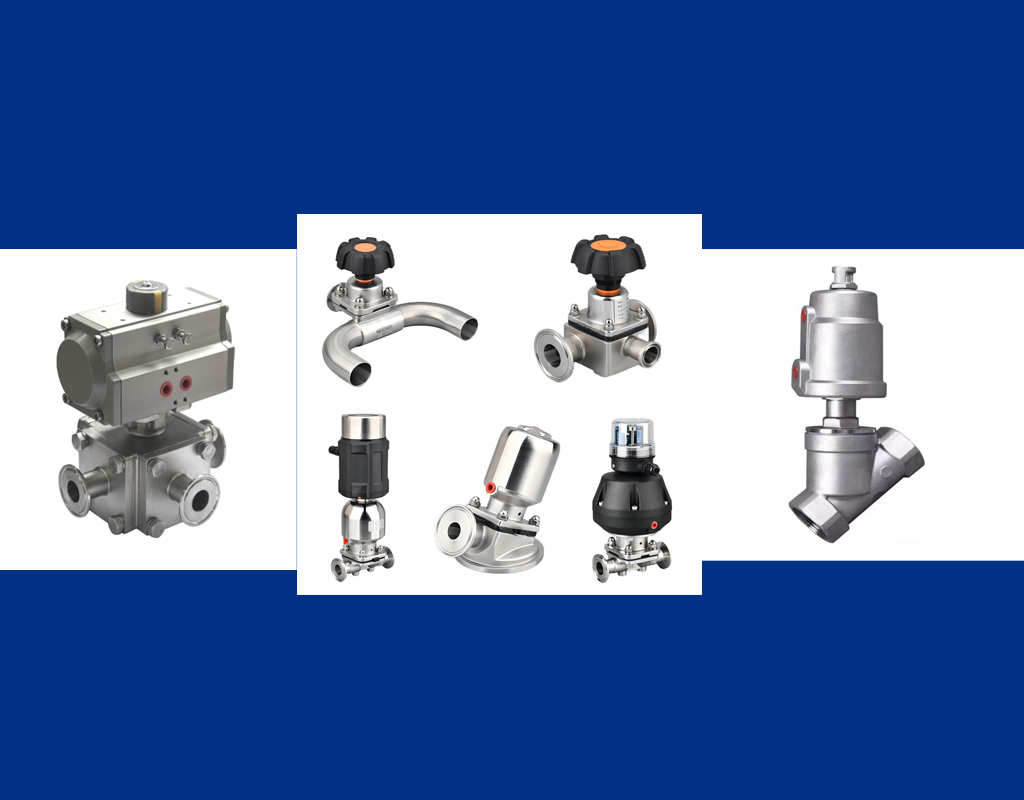
1. Diaphragm Valve: The Guardian of Purity & Abrasive Media
Diaphragm valves achieve sealing by utilizing a flexible diaphragm that isolates the upper chamber from the fluid path. This unique design makes them an ideal choice for handling special media.
- No Dead Space, No Internal Cavities: The diaphragm completely separates the fluid path from the external operating mechanism, creating a smooth, unobstructed flow path. This significantly prevents clogging and sediment build-up of slurries and viscous liquids, ensuring media purity.
- Excellent Abrasion and Corrosion Resistance: Diaphragms come in various materials (e.g., rubber, PTFE) which can be selected based on the media's properties, offering superior resistance to abrasive particles and corrosive fluids.
- Easy to Clean and Maintain: The simplified flow path is perfectly suited for CIP/SIP (Clean-in-Place/Sterilize-in-Place) systems, meeting stringent sanitary requirements and reducing cleaning complexity and downtime.
- Glandless Design: Eliminates the risk of media leakage and environmental contamination commonly associated with traditional valve packing glands.
- Gentle on Shear-Sensitive Media: With no internal obstructions, the valve minimizes the shear forces exerted on the media, preserving the integrity of slurries or viscous liquids.
- Pressure and Temperature Limitations: Due to the diaphragm material's constraints, these valves are generally not suitable for ultra-high pressure or ultra-high temperature applications.
- Diaphragm Lifespan: The diaphragm is a wear part and requires periodic replacement, especially in high-cycle operations or when handling highly abrasive media.
- Flow Characteristics: Flow control precision is generally moderate, making them more suitable for shut-off applications.
- High Purity Requirements: Food & beverage, pharmaceutical, biotechnology industries.
- Abrasive Media: Slurries containing sand, fibers, or crystals (e.g., ceramic slurries, mineral slurries, wastewater treatment).
- Highly Corrosive Media: Acids, alkalis, and other corrosive chemicals.
- Viscous Liquids: Paints, coatings, latex, high-viscosity syrups, etc.
2. Ball Valve: The Go-To for Quick Shut-off & Tight Sealing
Ball valves are widely popular due to their quarter-turn operation for full open or full closed positions, offering a low-resistance, straight-through flow path.
Advantages:
- Quick Open/Close: A quarter turn provides rapid and convenient operation.
- Low Flow Resistance, High Flow Capacity: When fully open, the bore aligns with the pipeline diameter, resulting in minimal fluid resistance, ideal for high-flow applications.
- Excellent Sealing: Relies on the tight fit between the ball and seat for zero leakage, particularly effective for gases or high-pressure fluids.
- Compact Structure: Relatively small in size, requiring less installation space.
Disadvantages:
- Internal Dead Spaces: The internal cavity of the ball can trap slurries or viscous liquids, leading to build-up, contamination, or clogging. This makes cleaning difficult and unsuitable for high-purity requirements.
- Wear Risk: Particles in slurries can scratch the ball's surface or valve seats during rotation, impairing sealing performance and shortening lifespan.
- Poor Throttling: Prolonged operation in a semi-open position for throttling can cause accelerated wear on the seat and ball, compromising sealing.
- Shear Effect: The media may experience shear forces during ball rotation, making them unsuitable for shear-sensitive applications.
Ideal Applications:
- Non-Abrasive or Mildly Abrasive Slurries: Such as muds or emulsions without hard particles.
- Medium-Low Viscosity Liquids: Industrial fluids that do not require frequent cleaning.
- Applications Requiring Rapid Shut-off: For emergency shut-off valves.
- Where Extremely Low Pressure Drop is Required in the Full-Open Position.
3. Angle Seat Valve: High Cycle Life & High Flow "Powerhouse"
An angle seat valve is a type of globe valve typically operated by pneumatic or electric actuators. Its body is angled, and fluid flows through this angled path.
Advantages:
- High Flow, Low Pressure Drop: The unique angled body design ensures a short and smooth fluid path, resulting in a high flow coefficient (Kv value) and minimal pressure loss, outperforming traditional globe valves.
- High Cycle Life, Fast Response: Driven by pneumatic actuators, these valves offer rapid opening and closing actions, making them suitable for high-frequency, automated control systems.
- Robust and Durable: Constructed from stainless steel or bronze bodies, providing high mechanical strength and corrosion resistance.
- Good Anti-Clogging Capability: The internal flow path is relatively wide, less prone to clogging by small particles or fibers, suitable for slightly viscous or suspended media.
- Reliable Sealing: The vertical movement of the stem relative to the seat ensures good sealing.
Disadvantages:
- Not a Straight-Through Flow Path: Still involves a degree of fluid direction change, posing a risk of clogging for extremely viscous or highly depositing slurries.
- Seal Wear: The valve plug may contact and rub against the media during opening and closing, leading to seal wear, especially with abrasive slurries.
- Not for High Purity: Compared to diaphragm valves, the internal structure still has crevices, making thorough cleaning difficult.
- Potential for Shear: Fluid may experience some shear as it passes through the angled path.
Ideal Applications:
- High-Frequency, High-Flow Demands: Automation control, filling lines, steam control, water treatment.
- Slightly Viscous or Particle-Containing Fluids: Such as clear water with minor suspended solids, dilute slurries, milk, beer, etc.
- Industrial processes requiring fast response times.
Comparative Summary & Selection Recommendations
Here's a brief summary of the key characteristics of the three valve types when handling slurries and viscous liquids:
|
Characteristic\Valve Type |
Diaphragm Valve |
Ball Valve |
Angle Seat Valve |
|
Anti-Clogging |
Excellent (No dead zones) |
Poor (Cavities present) |
Good (Smooth flow path) |
|
Wear Resistance |
Excellent (Diaphragm material) |
Poor (Prone to scratching) |
Fair (Plug wear) |
|
High Purity |
Superior (CIP/SIP capable) |
Unsuitable |
Moderate |
|
Sealing Performance |
Good |
Excellent |
Good |
|
Flow Capacity |
Lower |
Excellent (Full bore) |
Excellent (High Kv) |
|
Switching Speed |
Slower |
Fast (90° turn) |
Fast (Pneumatic) |
|
Cost |
Higher |
Moderate |
Moderate |
Selection Recommendations:
- When your media is highly abrasive, corrosive, extremely viscous, or demands exceptionally high purity (e.g., in food or pharmaceutical production), the Diaphragm Valve is your top choice. It effectively prevents clogging, wear, and contamination, ensuring product quality and stable equipment operation.
- If you require rapid shut-off/on control, high flow rates, and your media is of moderate viscosity, contains few or no non-abrasive particles, and you are not sensitive to residual fluid within the valve, then a Ball Valve is an economical and efficient option. However, avoid prolonged throttling with ball valves.
- For applications demanding frequent, fast opening/closing cycles, with medium-low viscosity media, minimal suspended solids, and a need for low-pressure drop (such as steam, air, water, or dilute slurries), the Angle Seat Valve offers robust and reliable performance.
Choosing the right valve not only effectively solves the challenges of handling slurries and viscous liquids but also significantly boosts your production efficiency, reduces maintenance costs, and extends equipment lifespan. We understand the complexity of diverse operating conditions; therefore, the optimal solution often requires precise evaluation and customization by a professional team.
Contact Us: Your Fluid Control Experts
Are you facing dilemmas in valve selection? Our team of expert engineers possesses extensive industry experience and product knowledge. We can provide you with comprehensive, one-stop solutions and technical support for diaphragm valves, ball valves, angle seat valves, and other valve types, tailored to your specific media characteristics, process parameters, and budget.
Contact us today to overcome your slurry and viscous liquid handling challenges and achieve a more efficient, safer production process!
The Invisible Line of Defense: How ASME BPE-2024 Safeguards Every Drop of Medicinal Fluid
DIN 11850: The cornerstone of industrial hygiene connectors - a key standard for pure and efficient production
Related Article

DIN 11866 is the overarching standard for aseptic systems that uses DIN 11850 as its "Series A" option.