Achieving Hygienic Design: 5 Non-Negotiable EHEDG Requirements for Sanitary Valve and Pump Construction
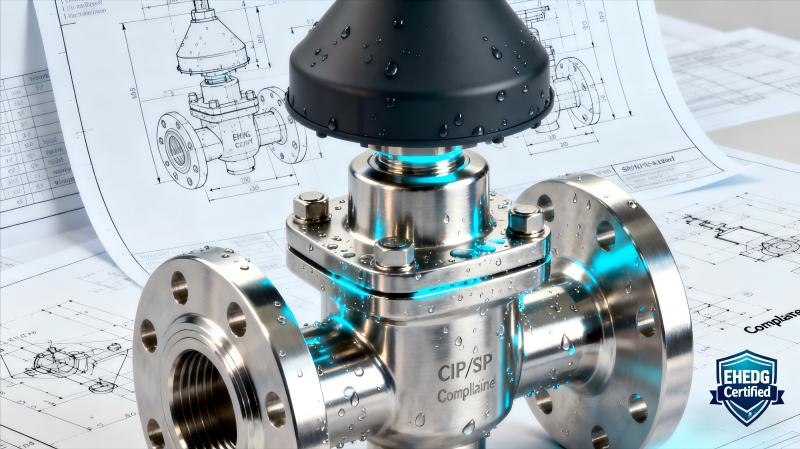
The fundamental principle of EHEDG is simple: equipment must be hygienically designed to allow for rapid, thorough, and verifiable cleaning (CIP/SIP). For critical fluid handling components like valves and pumps, any design flaw can become a dangerous contamination vector.
At Sangyie, we specialize in engineering and manufacturing sanitary valves, pumps, high-shear mixers, and fittings that exceed the highest EHEDG requirements. Here are the 5 non-negotiable EHEDG requirements that guide the design and manufacturing of all our sanitary flow components, ensuring superior hygiene performance and regulatory compliance for our customers.
1. Superior Surface Finish and Precision (Ra Value Compliance)
Microbial attachment and biofilm formation start on irregular surfaces. EHEDG mandates extremely strict requirements for the internal surface roughness (Ra Value) of all product-contact components.
Sangyie’s Commitment:
-
The internal surfaces of our sanitary valves and pumps undergo precision mechanical and often electro-polishing treatments, consistently achieving Ra ≤ 0.8 µm (and down to Ra ≤ 0.4 µm for high-purity applications).
-
We ensure compliance not just through measurement, but through traceability. We provide Surface Finish Certificates to guarantee the consistency and quality of the finished Ra value, ensuring a surface too smooth for microbes to adhere to.
2. Mandatory Self-Draining Capability
Residual water or cleaning solution creates an ideal environment for microbial growth. EHEDG strictly requires all equipment to be fully self-draining to prevent liquid pooling.
Sangyie’s Design Solution:
-
Whether it’s a diaphragm valve or a centrifugal pump, all Sangyie hygienic designs adhere to minimum slope requirements (typically 3° or more) during installation and operation.
-
Our pump casings and valve bodies are meticulously designed to avoid flat horizontal planes, depressions, or pockets. This ensures that following a CIP cycle, all fluids exit smoothly. This feature is particularly crucial in the complex geometry of our bottom-mounted high-shear mixers, guaranteeing residue-free drainage.
3. Elimination of Crevices and Dead Legs
"Dead Legs" or "Dead Zones" are areas where fluid flow is minimal or non-existent, preventing cleaning media from reaching them. These zones are notorious contamination harbors and a major focus of EHEDG inspection.
Sangyie’s Engineering Advantage:
-
Integrated Body Design: We optimize the casting and welding processes for our valve bodies to minimize crevices and hard-to-reach joint interfaces.
-
Compact Flow Path: Our fluid control components utilize compact flow path geometry, eliminating excessively long branch lines or unnecessary blind holes. This proactive design strategy eradicates flow stagnation points at the source.
4. Hygienic Seal Design and Material Compliance
Seals and gaskets are often the weak link in a sanitary system, prone to microbial ingress and chemical degradation. EHEDG demands that sealing systems are installed without gaps and that the materials resist the high temperatures and corrosive chemicals used during CIP/SIP.
Sangyie’s Quality Assurance:
-
Compressed Sealing: Our diaphragms and O-rings use compressed or adaptive seating designs. This ensures that the seal is tightly compressed against the metal surface during assembly, eliminating the micro-crevices where bacteria typically harbor.
-
Certified Materials: All elastomers we utilize (such as EPDM and PTFE) are tested for EHEDG compatibility, meeting both FDA CFR Title 21 and the required USP Class VI standards, ensuring their stability and durability throughout intensive cleaning and sterilization cycles.
5. Accessibility and Cleanability for Maintenance
True hygienic design goes beyond static cleanliness; it includes ease of inspection and disassembly for maintenance. EHEDG promotes the use of easily disassembled connections (like clamps) and requires designs that allow easy access to critical areas for inspection.
Sangyie’s Focus on Operability:
-
Modular Components: Sangyie’s sanitary pumps and high-shear mixers utilize modular designs. This allows critical components (such as mechanical seals) to be inspected or replaced without completely dismantling the entire unit, minimizing downtime and simplifying validation.
-
Standardized Connections: We provide fittings compliant with ISO 2852 and DIN 11853 standards, ensuring seamless integration with existing European piping systems while guaranteeing the connecting points are easy to sanitize and re-assemble.
Secure Your System’s EHEDG Compliance: Start with the Components
For equipment manufacturers and end-users who value quality, long-term system integrity, and global market compliance, selecting components designed according to core EHEDG standards is vital.
Sangyie provides not just products, but a guarantee of compliance, backed by comprehensive Material Test Reports (EN 10204 3.1 MTRs). Our valves, pumps, and fittings are the foundation for achieving the highest level of hygiene and maximizing the uptime of your process lines.
Learn More: Contact a Sangyie hygienic engineering specialist today to receive detailed specifications on our EHEDG-compliant valves, pumps, and high-shear mixers, and ensure your fluid control system is impeccable from the start.
[Click Here to Contact Us / Visit our Website at www.sangyie.com / Email us at [info@sangyie.com]
Sangyie Technology — Engineering the Flow of Your Success.
Standard comparison of 316L stainless steel: EN1.4404 vs EN1.4435
Choosing the Best Hygienic Vertical Mixer: A Buyer's Guide for Industrial Applications
Related Article

DIN 11866 is the overarching standard for aseptic systems that uses DIN 11850 as its "Series A" option.