Double Block and Bleed: Understanding the Safety and Efficiency of Designs
The industrial sector demands paramount safety, efficiency, and reliability. Among the critical components ensuring these objectives are met, double block and bleed (DBB) valves, particularly their advanced dual-seat designs, play a pivotal role. While widely recognized in traditional heavy industries like oil & gas, chemical processing, and water treatment, their application is equally vital in hygienic and sensitive sectors such as food, beverage, pharmaceuticals, biotechnology, and personal care, where preventing cross-contamination is non-negotiable. This article delves into the design, function, and benefits of DBB valves, helping you understand why these robust solutions are indispensable for secure, efficient, and compliant operations across all critical industrial applications.
What Are Double Block and Bleed Valves?
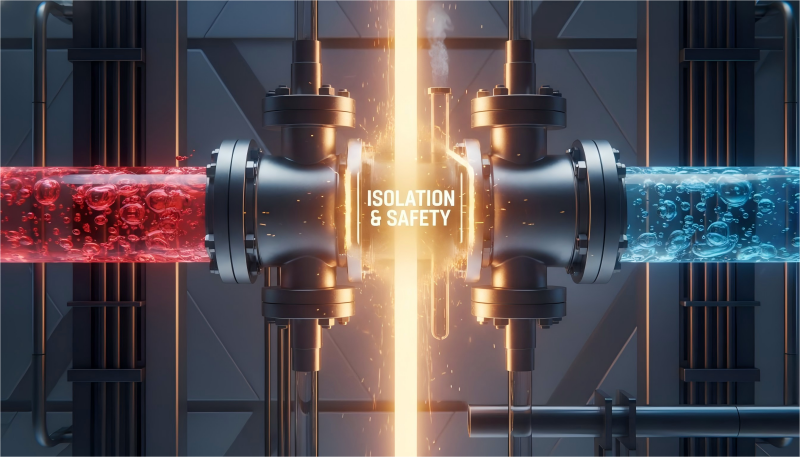
Double block and bleed (DBB) valves are a specialized type of industrial valve engineered to provide a secure and verifiable isolation barrier within a pipeline. They achieve this by simultaneously blocking the flow of fluid from both upstream and downstream directions and allowing for the safe release, or "bleed," of any trapped fluid or pressure in the cavity between the two closed block valves. This dual-seat design ensures complete isolation, making them crucial for maintenance, system integrity verification, and ensuring process safety, particularly in environments handling hazardous or sensitive media.
Components and Design Principles
A typical DBB valve consists of two main seating surfaces, integrated within a single valve body, which act as independent block valves. A third port, known as the bleed valve or vent, is positioned precisely between these two seats. When both primary seats are closed, the bleed valve can be opened to vent any fluid or pressure that might have leaked past the upstream seat. This verifies that no process fluid is reaching the downstream side, guaranteeing a true zero-leakage isolation.
The materials used in the construction of DBB valves are critical and selected based on the specific application's requirements. Common options include robust stainless steel (e.g., 316L for hygienic applications), carbon steel, and various high-performance alloys. The choice of material dictates the valve's durability, resistance to corrosion, temperature, and pressure capabilities, directly impacting its longevity and reliability in diverse operating conditions.
Why Use Double Block and Bleed Valves?
The implementation of double block and bleed valves offers unparalleled advantages in industrial settings, significantly enhancing both safety and operational efficiency.
Enhanced Safety
The paramount reason for deploying DBB valves is their superior safety performance. By establishing a verifiable double barrier, they allow maintenance personnel to work on downstream equipment with the absolute assurance that no hazardous or high-pressure fluids can reach their work area. The bleed function serves as a critical safety check, confirming positive isolation by releasing any potential leakage or residual pressure between the seats, thus dramatically reducing the risk of accidents, spills, or exposure to dangerous substances.
Increased Efficiency and Reliability
DBB valves are instrumental in optimizing operational efficiency. They minimize costly downtime by providing a swift and reliable means to isolate sections of a pipeline for routine maintenance, equipment repair, or inspection without needing to shut down the entire process. The inherent redundancy of the dual-seat design bolsters system reliability; even if one seat experiences a minor leak or failure, the second seat maintains the integrity of the isolation, preventing potential catastrophic consequences and ensuring continuous, uninterrupted operation in critical processes.
Superior Contamination Control
Beyond basic safety, DBB valves excel in preventing cross-contamination. This is particularly vital in multi-product lines or processes involving different media that must never mix. By providing a secure intermediate bleed path, DBB valves ensure that no product A can leak into product B's line, nor can cleaning agents contaminate the product. This capability is foundational for maintaining product purity and quality.
Applications of Double Block and Bleed Valves Across Industries
Double block and bleed valves are versatile and essential components used across a broad spectrum of industries, each benefiting from their unique isolation capabilities.
Oil and Gas Industry
In the demanding oil and gas sector, DBB valves are crucial for ensuring safety and efficiency in upstream, midstream, and downstream operations. They are used to isolate critical sections of pipelines, wellheads, and processing units for maintenance, instrument calibration, or emergency shutdowns. Their robust design makes them indispensable in environments where high pressures, abrasive fluids, and volatile substances are common.
Chemical Processing
The chemical processing industry, dealing with a vast array of corrosive, toxic, and reactive substances, relies heavily on DBB valves. They provide a safe means of isolating hazardous chemicals, preventing leaks that could lead to environmental damage or personnel exposure. DBB valves are critical for safely taking equipment offline for repair or cleaning while maintaining the integrity of adjacent process lines.
Water Treatment and Utilities
In water treatment facilities and utility networks, DBB valves play a key role in managing the flow of water, wastewater, and various treatment chemicals. They enable isolated maintenance of pumps, filters, and other equipment, ensuring uninterrupted service and preventing the mixing of treated and untreated water or the release of treatment chemicals into unintended areas.
Hygienic and Sterile Industries (Food, Beverage, Pharmaceutical, Biotech, Personal Care)
For industries where product integrity, purity, and contamination prevention are paramount, hygienic Double Block and Bleed (DBB) valves (often referred to as Mix-Proof Valves) are indispensable. These specialized valves are engineered to:
-
Prevent Cross-Contamination: Securely separate dissimilar fluids (e.g., different product batches, product and CIP solutions, or raw materials and finished goods) in multi-line production systems.
-
Enable Safe CIP/SIP: Facilitate efficient Clean-In-Place (CIP) and Sterilize-In-Place (SIP) processes without product contamination, allowing cleaning of one line while production continues in another.
-
Ensure Regulatory Compliance: Help manufacturers meet stringent health and safety regulations, such as FDA requirements, 3-A Sanitary Standards, EHEDG guidelines, and GMP (Good Manufacturing Practice), by guaranteeing product purity.
-
Maintain Aseptic Conditions: Critical in biotech and pharmaceutical manufacturing for maintaining sterile environments during sensitive processes like fermentation, cell culture, and vaccine production.
Choosing the Right Double Block and Bleed Valve
Selecting the appropriate double block and bleed valve is crucial for achieving optimal performance, ensuring safety, and meeting regulatory compliance. Several key factors must be carefully considered.
Material Selection
The valve's construction material is paramount and must be compatible with the fluid being controlled, as well as the operating temperature and pressure. For standard industrial applications, carbon steel or various alloys may suffice. However, for hygienic and sterile processes (e.g., in food, pharma, biotech), materials like 316L stainless steel are often mandated. Furthermore, the surface finish (e.g., Ra < 0.8µm) and gasket materials must also comply with industry-specific sanitary standards to resist corrosion, facilitate effective cleaning, and prevent bacterial adhesion.
Size and Pressure Rating
Accurate sizing and appropriate pressure ratings are critical. The valve's size must match the pipeline's requirements to ensure optimal flow and minimize pressure drops, while its pressure rating must safely accommodate the system's maximum operating and surge pressures. Incorrect sizing or an inadequate pressure rating can lead to inefficient operation, premature wear, or catastrophic valve failure.
Compliance and Industry Standards
Ensure that the chosen DBB valve fully complies with relevant industry standards and certifications. This is especially important for safety-critical applications (e.g., API 6A, API 6D) and hygienic applications (e.g., 3-A Sanitary Standards, EHEDG certification, FDA compatibility, ATEX directives). Compliance guarantees that the valve has undergone rigorous testing and meets the strict requirements for safety, performance, and material suitability in your specific operational context.
Conclusion
Double block and bleed valves are an essential component of modern industrial systems, offering unparalleled safety, efficiency, and reliability. Their unique dual-seat design provides verifiable isolation, making them invaluable across diverse sectors, from critical oil and gas operations and chemical processing to sensitive food processing, pharmaceutical production, and biotechnology. By understanding their design, function, applications, and the crucial selection criteria – particularly material compatibility and adherence to hygienic standards – you can make informed decisions to ensure the safest, most efficient, and compliant operation of your industrial systems. Whether isolating pipelines for maintenance or safeguarding product purity during complex cleaning sequences, DBB valves are a pivotal element in maintaining operational integrity and achieving manufacturing excellence.
Ready to enhance the safety and efficiency of your processes with superior isolation? Explore our comprehensive range of high-quality Double Block and Bleed Valves, engineered for diverse industrial and hygienic applications. Contact our expert team today to discuss your specific requirements and find the perfect DBB valve solution tailored for your facility.
[Click Here to Contact Us / Visit our Website at www.sangyie.com / Email us at [info@sangyie.com]
Sangyie Technology — Engineering the Flow of Your Success.
3A vs. ASME BPE Standards: The Essential Guide for Biotech & Pharma Compliance
Season's Greetings from Sangyie: Celebrating a Year of Purity and Innovation
Related Article

DIN 11866 is the overarching standard for aseptic systems that uses DIN 11850 as its "Series A" option.