3A vs. ASME BPE Standards: The Essential Guide for Biotech & Pharma Compliance
In the competitive worlds of food processing, pharmaceuticals, and biotechnology, selecting the right sanitary equipment is not just about performance—it’s about compliance and safety.
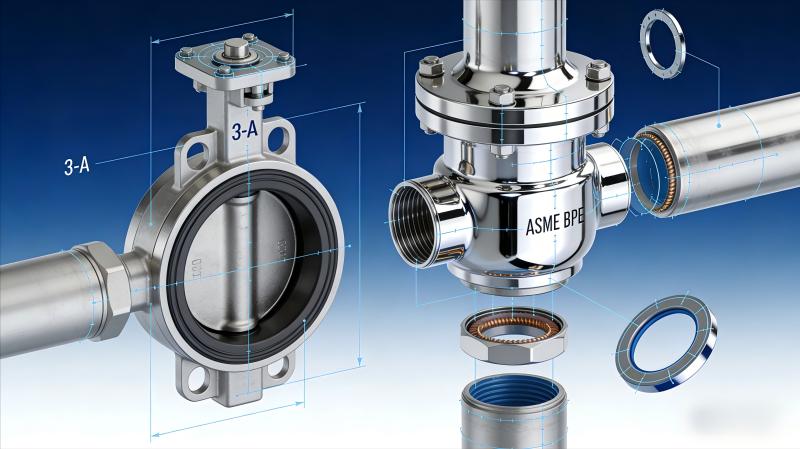
As a procurement manager or process engineer, you often encounter two dominant standards on technical drawings: 3-A SSI and ASME BPE. While both ensure hygiene, they serve different purposes. Using a 3-A valve in a high-purity bioreactor line could lead to audit failures, while over-specifying ASME BPE parts for a simple beverage line might blow your budget.
At Sangyie, we manufacture high-precision sanitary valves, pumps, and fittings that meet both global standards. In this guide, we break down the critical differences to help you choose the right solution for your facility.
1. What is the 3-A Sanitary Standard?
Originating in the 1920s, the 3-A Sanitary Standards (created by 3-A SSI) are primarily focused on the food, beverage, and dairy industries.
The core philosophy of 3-A is cleanability. It ensures that equipment (like Sangyie’s sanitary centrifugal pumps or butterfly valves) can be mechanically cleaned or dismantled for manual cleaning without harboring bacteria.
-
Focus: Food safety and rapid cleaning.
-
Key Requirement: Smooth surfaces, self-draining designs, and non-toxic materials.
-
Typical Application: Dairy processing, juice bottling, breweries.
2. What is ASME BPE?
ASME BPE (BioProcessing Equipment) is a much stricter standard developed by the American Society of Mechanical Engineers. It is the global benchmark for the biopharmaceutical and personal care industries.
ASME BPE goes beyond simple "cleanliness" to ensure sterility and material purity. It dictates strict controls on chemical composition (specifically sulfur content in stainless steel) to ensure high-quality orbital welding.
-
Focus: Sterility, bio-burden control, and weldability.
-
Key Requirement: Specific Ra (Roughness Average) values, electropolishing, and full material traceability.
-
Typical Application: WFI (Water for Injection) loops, vaccine production, cell culture systems.
3. Key Differences: 3A vs. ASME BPE
Here is a quick comparison to help you decide which Sangyie product line fits your needs:
| Feature | 3-A Standards (Food & Dairy) | ASME BPE (Biotech & Pharma) |
|---|---|---|
| Primary Industry | Food, Beverage, Dairy | Biopharma, Semiconductor, Personal Care |
| Material | SS304 or SS316L | Strictly SS316L with controlled Sulfur (0.005%-0.017%) |
| Surface Finish (Ra) | Typically 32 Ra (0.8 µm) | Very fine: 15 Ra to 20 Ra (0.38 - 0.5 µm) |
| Polishing Method | Mechanical Polishing is common | often requires Electropolishing (EP) |
| Seals/Gaskets | Food Grade (FDA) | Class VI (Strict biocompatibility testing) |
| Documentation | Certificate of Compliance | Full Mill Test Reports (MTRs), Weld Logs |
4. Why Surface Finish & Material Chemistry Matter
For our biotech clients, the difference often lies in the microscopic details.
-
The "Dead Leg" Risk: In biotech, a rough surface or a poor weld can create a biofilm where bacteria hide, surviving CIP (Clean-in-Place) cycles. Sangyie’s ASME BPE compliant tubing and fittings undergo rigorous electropolishing to create a mirror-like passive layer, minimizing contamination risks.
-
Orbital Welding: If you are building a WFI loop, you need automatic orbital welding. Sangyie’s BPE fittings use 316L steel with specific sulfur ranges to ensure the weld is consistent and corrosion-resistant. Standard 3-A fittings may not weld as cleanly in these automated systems.
5. How Sangyie Ensures Compliance
Whether you are brewing the world's best beer or manufacturing life-saving insulin, Sangyie has the manufacturing capability to support you.
-
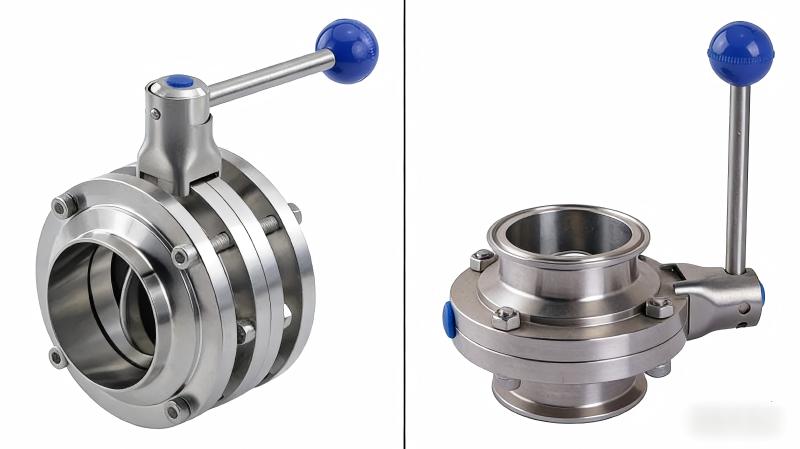
For Food & Bev: Our 3-A certified series (including sanitary butterfly valves and mixers) offers robust performance and cost-effectiveness for high-volume processing.
-
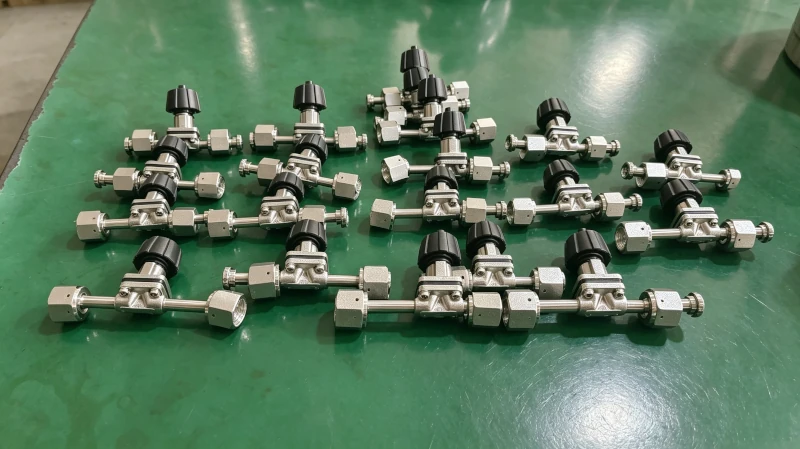
For Biotech: Our BPE High-Purity series (diaphragm valves, sampling valves, and fittings) is manufactured in cleanroom environments. Every fitting is laser-marked with a heat number for 100% traceability.
We provide the documentation auditors love: When you order from Sangyie, you receive a complete turnover package, including:
-
Material Test Reports (MTRs)
-
Surface Finish Certifications
-
FDA & USP Class VI Compliance Certificates for gaskets
Conclusion: Making the Right Choice
Don't risk your production line's integrity. If you are dealing with injectable drugs or high-purity water, specify Sangyie ASME BPE components. If you are processing yogurt or beer, our Sangyie 3-A line is your perfect workhorse.
Need help selecting the right valve or pump for your project? Contact Sangyie’s engineering team today. We provide free consultation to ensure your fluid handling system is compliant, efficient, and cost-effective.
[Click Here to Contact Us / Visit our Website at www.sangyie.com / Email us at [info@sangyie.com]
Sangyie Technology — Engineering the Flow of Your Success.
What is a Sanitary Pump? Engineering Hygienic Excellence
Double Block and Bleed: Understanding the Safety and Efficiency of Designs
Related Article

DIN 11866 is the overarching standard for aseptic systems that uses DIN 11850 as its "Series A" option.