316L vs. 304 Stainless Steel: The Ultimate Guide to Choosing Your Safety Overflow Valve
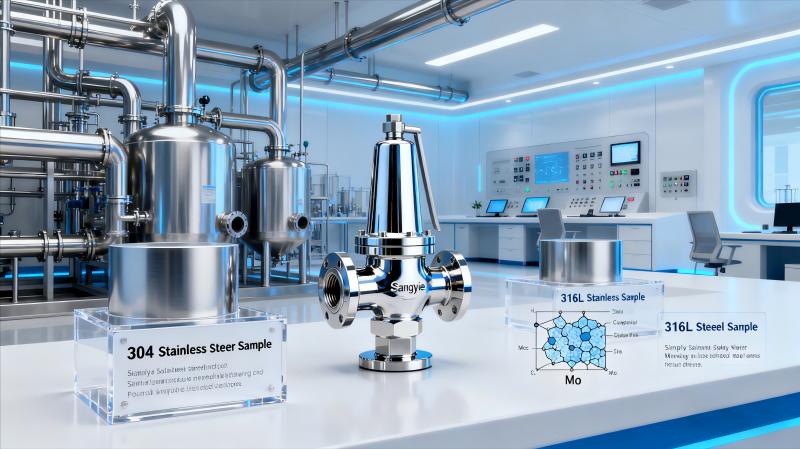
In high-stakes hygienic industries like food processing, pharmaceuticals, and biotechnology, every component in your process line carries weight. A single point of failure can lead to costly downtime, product loss, or even safety incidents. When it comes to safety overflow valves, their role is critical: they are the guardians of your system's pressure integrity.
But the valve's performance is only as good as the material it's made from. The most common dilemma faced by engineers and procurement specialists is the choice between 304 and 316L stainless steel. While both are excellent, the wrong choice can have significant consequences.
In this guide, we’ll clear up the confusion and help you make the perfect material selection for your application.
First, why is stainless steel the go-to material for hygienic safety valves? The answer lies in its corrosion resistance, durability, and ease of cleaning. Its non-porous surface prevents bacteria buildup, making it ideal for CIP (Clean-in-Place) and SIP (Sterilize-in-Place) processes, a standard requirement in industries served by Sangyie.
Let’s break down the key differences.
304 Stainless Steel: The Reliable Workhorse
-
Composition: Contains 18% chromium and 8% nickel.
-
Strength: Excellent resistance to a wide range of atmospheric and chemical corrosives.
-
Best For: Environments with mild acids, alkalis, and chlorides. Perfect for applications in:
-
Dairy processing (milk, yogurt)
-
Brewing and beverage production (beer, soft drinks)
-
Certain personal care and cosmetic products
-
-
Cost-Effectiveness: 304 is generally more affordable, offering great value for less aggressive processes.
316/316L Stainless Steel: The Champion of Corrosion Resistance
-
Composition: Similar to 304, but with a crucial addition: 2-3% Molybdenum.
-
The Molybdenum Advantage: This element dramatically enhances resistance to pitting and crevice corrosion, particularly from chlorides and acidic chlorides.
-
The "L" Version: 316L has a lower carbon content, which minimizes the risk of carbide precipitation during welding—ensuring the corrosion resistance remains intact in the heat-affected zones. This is critical for valve integrity.
-
Best For: Highly corrosive environments. Essential for:
-
Pharmaceutical and Biotech: Where aggressive cleaning and sterilizing agents are used.
-
Chemical Processing: Handling brines, dyes, and other harsh chemicals.
-
Coastal or High-Chloride Environments: Where airborne salts are present.
-
Semiconductor Manufacturing: Where ultra-pure, corrosive chemicals are standard.
-
At Sangyie, we understand that material selection is just the beginning. A superior stainless steel safety overflow valve is defined by precision engineering and stringent quality control.
When you choose a valve from Sangyie, whether in 304 or 316L, you also benefit from:
-
Mirror-Finish Interior Surfaces (Ra < 0.8µm): Our advanced polishing techniques ensure optimal hygiene, prevent product adhesion, and allow for efficient, validated cleaning.
-
Full Compliance with International Standards: Our valves are designed to meet FDA, EHEDG, and 3-A standards, guaranteeing their suitability for your most demanding applications.
-
Expert Consultation: Our technical team doesn’t just sell you a product; we partner with you to analyze your specific process media, temperature, and pressure requirements to recommend the optimal solution.
So, which one is right for you?
-
Choose 304 Stainless Steel for cost-effective, reliable performance in standard food, beverage, and dairy applications with minimal chloride exposure.
-
Choose 316L Stainless Steel for superior protection in pharmaceutical, biotech, chemical, or any environment where chlorides and aggressive acids are present.
Still Unsure? Let Sangyie Be Your Guide.
Don't leave your process safety to chance. The expert engineers at Sangyie are here to help you navigate this critical decision.
Download our free technical specification sheet for our Safety Overflow Valves, or contact our team directly for a personalized consultation. Let us help you protect your process, your product, and your reputation.
[Click Here to Contact Us / Visit our Website at www.sangyie.com / Email us at [info@sangyie.com]
Sangyie Technology — Engineering the Flow of Your Success.
National Day Holiday Notice
How to Select and Maintain Hygienic Check Valves for CIP/SIP Systems
Related Article

DIN 11866 is the overarching standard for aseptic systems that uses DIN 11850 as its "Series A" option.