
The Workhorse of Your Process Line: Why a Rotary Lobe Pump is Your Most Versatile Choice
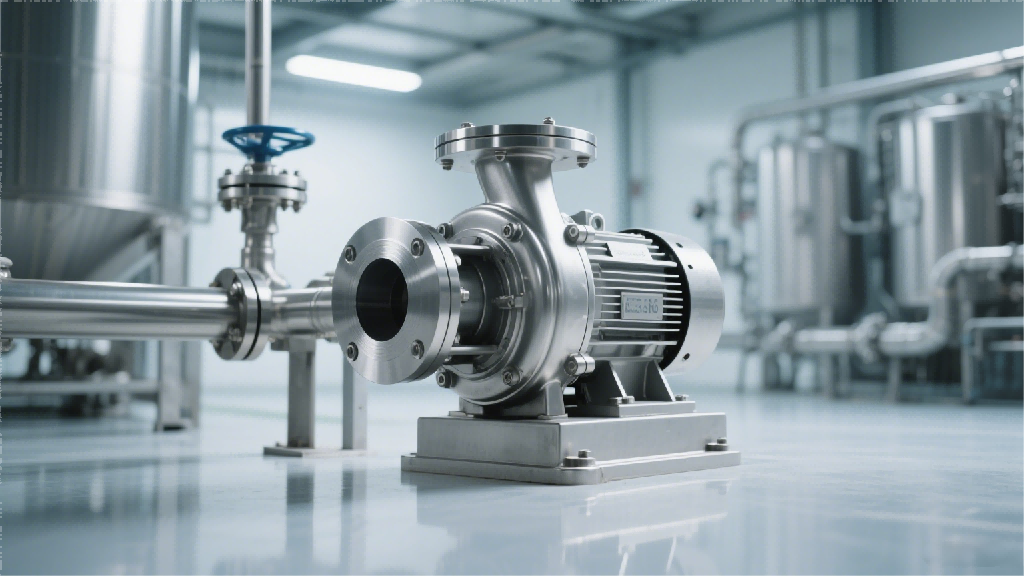
While a diverse range of pumps exists for specialized tasks, one stands out for its remarkable adaptability: the rotary lobe pump. Often hailed as the "workhorse" of the process line, its unique design makes it an exceptionally versatile choice for a vast array of applications.
As a manufacturer specializing in a full suite of hygienic solutions, from centrifugal and twin-screw pumps to valves and fittings, we understand that the "best" pump is always the one that fits the job. However, time and again, the rotary lobe pump proves to be the most valuable player for businesses needing flexibility without compromise.
What is a Rotary Lobe Pump and How Does it Work?
At its core, a rotary lobe pump is a type of positive displacement pump. Imagine two non-contacting rotors (lobes) spinning in opposite directions within a sealed pump casing. As they rotate, they create expanding cavities on the suction side, drawing fluid into the pump. The fluid is then trapped in the pockets between the lobes and the casing and is carried around to the discharge side, where the meshing of the lobes forces the fluid out.
This simple, elegant mechanism is the key to its versatility.
The Top 5 Reasons the Rotary Lobe Pump is Your Most Versatile Asset
1. Unmatched Gentle Product Handling Many high-value products are shear-sensitive. Think of yogurts with fruit pieces, delicate cell cultures in biotech, or luxurious emulsions in cosmetics. The non-contacting lobes and slow-speed operation of a rotary lobe pump ensure that the product is moved gently, preserving its texture, consistency, and chemical structure. This minimizes product degradation and maximizes quality.
2. Master of Viscosity—From Water to Pastes This is where the lobe pump truly shines. It can efficiently handle an incredible range of viscosities. Whether you're pumping thin-as-water CIP fluids, fruit juices, medium-viscosity creams and lotions, or thick, heavy-duty products like tomato paste, caramel, or cosmetic gels, a single lobe pump can often manage it all. This adaptability reduces the need for multiple pump types on a single line.
3. Superior Solids Handling Capability Unlike centrifugal pumps, which can be damaged by solids or can damage the solids themselves, rotary lobe pumps are designed to pass them. They can easily transfer fluids containing soft or hard solids—such as fruit chunks in pie fillings, meat slurries, or exfoliants in personal care products—without crushing or clogging.
4. The Hygienic Gold Standard (CIP/SIP) For industries like food, dairy, and pharmaceuticals, cleanability is non-negotiable. Our rotary lobe pumps are engineered with a focus on hygienic design. Features include:
-
Crevice-free surfaces and self-draining profiles to prevent bacterial growth.
-
Easy access for inspection and maintenance.
-
Full Clean-in-Place (CIP) and Sterilize-in-Place (SIP) compatibility, ensuring you can maintain the highest sanitary standards with minimal downtime.
5. Operational Flexibility: Reversible and Self-Priming The ability to run in both directions is a huge operational advantage. A rotary lobe pump can be used to both load and unload a tank or strip a line, simplifying system design and operation. Furthermore, many configurations are self-priming, capable of handling entrained air and lifting fluid from below the pump level.
How Does It Compare to Other Pumps?
As experts in a wide range of pump technologies, we can help you choose the right tool for the job. Here’s a quick comparison:
-
vs. Centrifugal Pumps: Centrifugal pumps are fantastic for high-volume transfer of low-viscosity liquids like milk or beer. However, they struggle with high viscosity, are not self-priming, and their high-shear action is unsuitable for delicate products or those with solids.
-
vs. Twin Screw Pumps: Twin screw pumps are also excellent positive displacement pumps, capable of handling very high viscosities and generating high pressure. They are ideal for extremely demanding applications, but can be more complex. The rotary lobe pump often presents a more cost-effective and simpler "all-rounder" solution for a majority of hygienic tasks.
-
vs. Sine Pumps: Sine pumps offer the absolute lowest shear for ultra-delicate products like live cells. However, the rotary lobe pump provides an exceptional balance of gentle handling, robust performance, and efficiency across a wider pressure and viscosity range.
The Right Partner for Your Process
While the rotary lobe pump is arguably the most versatile pump in hygienic processing, the ultimate choice depends on the specific parameters of your application—flow rate, pressure, temperature, and product characteristics.
At Sangyie Technology, we don't just sell pumps; we provide integrated processing solutions. Our team of engineers is dedicated to understanding your unique challenges. By leveraging our deep expertise across our entire portfolio—including rotary lobe pumps, centrifugal pumps, twin-screw pumps, high-shear mixers, valves, and sanitary fittings—we can help you design a system that is efficient, reliable, and perfectly tailored to your needs.
Ready to find the true workhorse for your production line? Contact us today to discuss your application with one of our specialists. Let's build a more efficient process together.
[Click Here to Contact Us / Visit our Website at www.sangie.com / Email us at [info@sangyie.com]
Sangyie Technology — Engineering the Flow of Your Success.
An Icon of British Engineering: A Deep Dive into the BS/RJT Hygienic Standard
More Than Just Dimensions: A Deep Dive into the SMS Standard, a Cornerstone of Hygienic Design
Related Article

DIN 11866 is the overarching standard for aseptic systems that uses DIN 11850 as its "Series A" option.