The Ultimate Guide: Choosing the "Perfect Heart" for Your Sanitary Process Line
Does this sound familiar?
-
Damaged Product: Your delicate creams, cell cultures, or beverages with fruit pulp are compromised and lose value after being transferred.
-
Low Efficiency: Your pump fails to meet the required flow or pressure, creating a bottleneck that slows down your entire production line.
-
Cleaning Nightmares: Hygienic dead zones in your pump make CIP (Clean-in-Place) a nightmare, posing a serious risk of microbial contamination.
-
Frequent Downtime: Constant pump failures and repairs due to wear and tear lead to unexpected maintenance costs and crippling production halts.
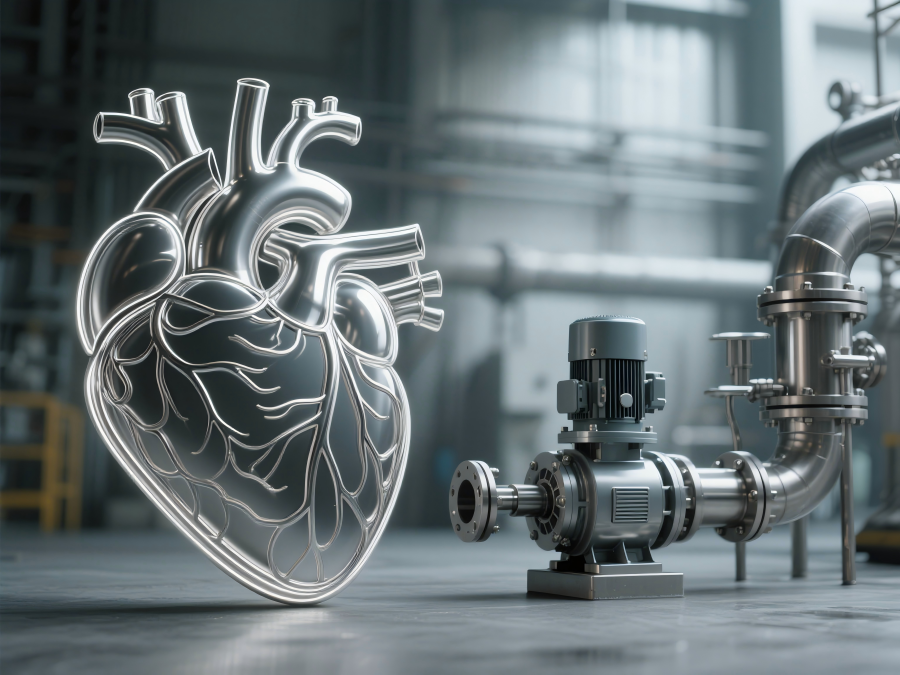
In high-purity industries like food processing, pharmaceuticals, biotechnology, and cosmetics, a pump is far more than a simple transfer device; it's the heart of your production line. A strong, reliable, and correctly specified "heart" ensures product integrity, boosts efficiency, and guarantees safety. Conversely, the wrong choice can lead to endless problems.
As experts in the field of sanitary fluid handling, Sangyie Technology has decades of industry experience. Today, we're stepping away from sales to share our knowledge, guiding you on how to select the "perfect heart" for your process line.
The Fundamentals: Four Core Factors You Must Consider
1. What Are You Pumping? This is the single most important factor in determining the pump type.
-
Viscosity: Is your product thin like water, or thick like honey or tomato paste? High-viscosity fluids require the positive displacement action of pumps like Rotary Lobe or Twin Screw pumps.
-
Solids Content: Does your fluid contain solids? Are they soft fruit pieces, fragile cells, or hard crystals? This dictates the pump's ability to handle solids without causing damage.
-
Shear Sensitivity: Is your product (e.g., cream, emulsions, biological media) sensitive to damage from high speeds or agitation? If so, you need a low-shear pump, such as a Sine Pump or Twin Screw Pump.
-
Temperature & Abrasiveness: High temperatures or abrasive particles in the fluid place greater demands on the pump's materials of construction, including elastomers and seals.
2. What Do You Need It to Do?
-
Flow Rate: How many gallons per minute (GPM) or cubic meters per hour (m³/hr) do you need to move? This is fundamental to sizing the pump.
-
Pressure/Head: How much resistance must the pump overcome? This includes pipe length, elbows, filters, and valves. This determines the required discharge pressure.
-
Self-Priming Capability: Do you need to draw fluid from a source located below the pump (e.g., from a drum or a pit)? If so, a Sanitary Self-Priming Pump is essential.
3. How Will You Keep It Clean? In our industries, cleanliness is non-negotiable.
-
CIP/SIP Capability: Does the pump support Clean-in-Place and Sterilize-in-Place protocols? This dramatically reduces downtime and manual cleaning risks.
-
Materials & Certifications: All product-wetted parts must be made from high-grade stainless steel (like AISI 316L) and feature seals compliant with FDA, 3-A, or EHEDG standards. Partnering with a certified manufacturer is your assurance of safety.
4. What Is Your Budget & Long-Term Goal? The value of a pump isn't just its purchase price. Consider its Total Cost of Ownership (TCO), which includes energy consumption, maintenance costs, and potential losses from downtime. A highly efficient and durable pump will save you more in the long run.
A Guide to Our Pumps: The Sangyie Technology Portfolio
Now that you understand the core factors, let's explore the leading types of sanitary pumps and what they do best. At Sangyie Technology, we provide a comprehensive range of solutions to meet every need.
| Pump Type | Best For... | The Sangyie Technology Advantage |
|---|---|---|
| Centrifugal Pumps | Low-viscosity, high-volume, solids-free fluid transfer. Ideal for milk, beverages, water, and CIP return applications. | Simple, efficient, and cost-effective. Our designs are optimized for high energy efficiency and easy maintenance. |
| Rotary Lobe Pumps | The versatile workhorse for low-to-high viscosity fluids, including those with soft solids. Perfect for yogurt, syrups, sauces, and shampoos. | Our pumps offer a variety of lobe profiles to handle different media, ensuring gentle, low-pulsation product handling. |
| Twin Screw Pumps | The "all-in-one" solution for low-to-very-high viscosity fluids, sensitive products, and large solids. Use for minced meat, fruit preparations, and cosmetic creams. | A true champion of versatility. It not only handles product gently but can also run at high speeds for CIP, acting as two pumps in one. |
| Sine Pumps | Extremely shear-sensitive products and fluids with large, fragile solids. Ideal for live cell cultures, diced fruit, and delicate sauces. | The "gentle giant." Its sinusoidal rotor creates powerful suction with virtually no pulsation and extremely low shear, preserving product integrity above all else. |
| Sanitary Self-Priming Pumps | Applications requiring the pump to lift fluid from a lower level. Perfect for tanker unloading, sump emptying, and CIP scavenging. | Solves difficult suction challenges with its excellent air-handling capability, especially in processes with entrained gas. |
| Hygienic Vacuum Pumps | Creating negative pressure in a process, such as deaeration or evaporation concentration systems. | Provides a reliable and clean vacuum source, ensuring your vacuum-dependent processes run efficiently and without contamination. |
Choose the Right Pump, Win from the Start.
As you can see, pump selection is both a science and an art. It demands a perfect fusion of fluid dynamics, process requirements, and hygienic design principles. A single misstep can lead to production losses and product recalls, while a wise choice will deliver value for years to come.
At Sangyie Technology, we are more than just manufacturers of high-quality sanitary valves, pumps, mixers, and fittings. We are your dedicated process partners. Our deep industry knowledge and comprehensive product portfolio are at your service to create the optimal fluid handling solution for your specific needs.
Don't struggle with complex data sheets and P&IDs alone!
If you are facing a production challenge or planning a new project, we invite you to connect with our technical experts. We would be delighted to listen to your requirements and provide a free, no-obligation consultation to help you find the strongest, most suitable "heart" for your process line.
[Click Here to Contact Us / Visit our Website at www.sangyie.com / Email us at [info@sangyie.com]
Sangyie Technology — Engineering the Flow of Your Success.
More Than Just Dimensions: A Deep Dive into the SMS Standard, a Cornerstone of Hygienic Design
Decoding Hygienic Standards: Why Your Production Line Needs ISO/IDF Fittings
Related Article

DIN 11866 is the overarching standard for aseptic systems that uses DIN 11850 as its "Series A" option.